Factory Direct PETG

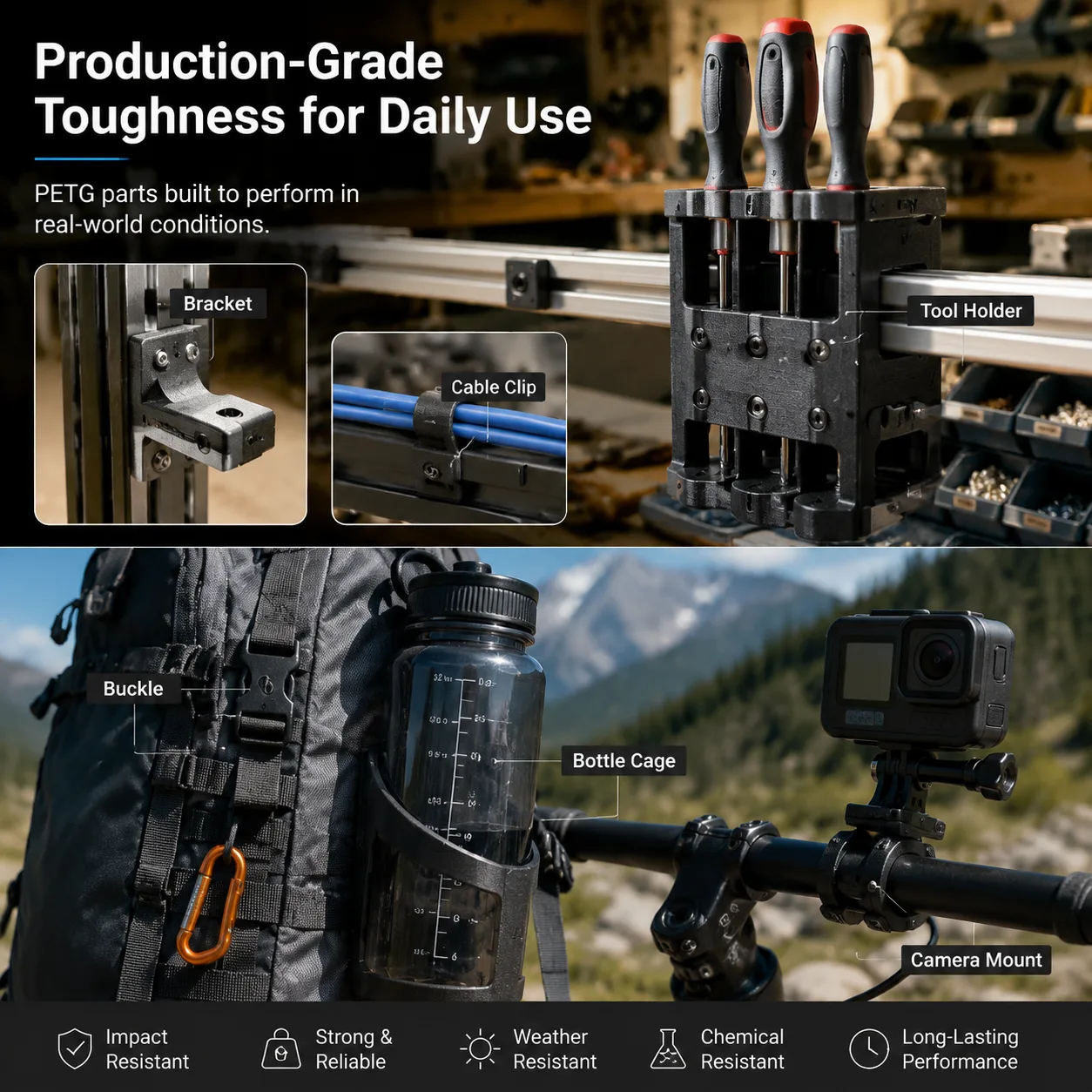
Brand: Yiqiu3D · PLA parts warp in a hot car or crack outdoors? PETG's toughness and heat resistance up to 80 °C mean functional parts keep their shape where PLA fails.

  • Functional parts can look good too
  • Impact
  • Layer adhesion is PETG's superpower
Compare filaments
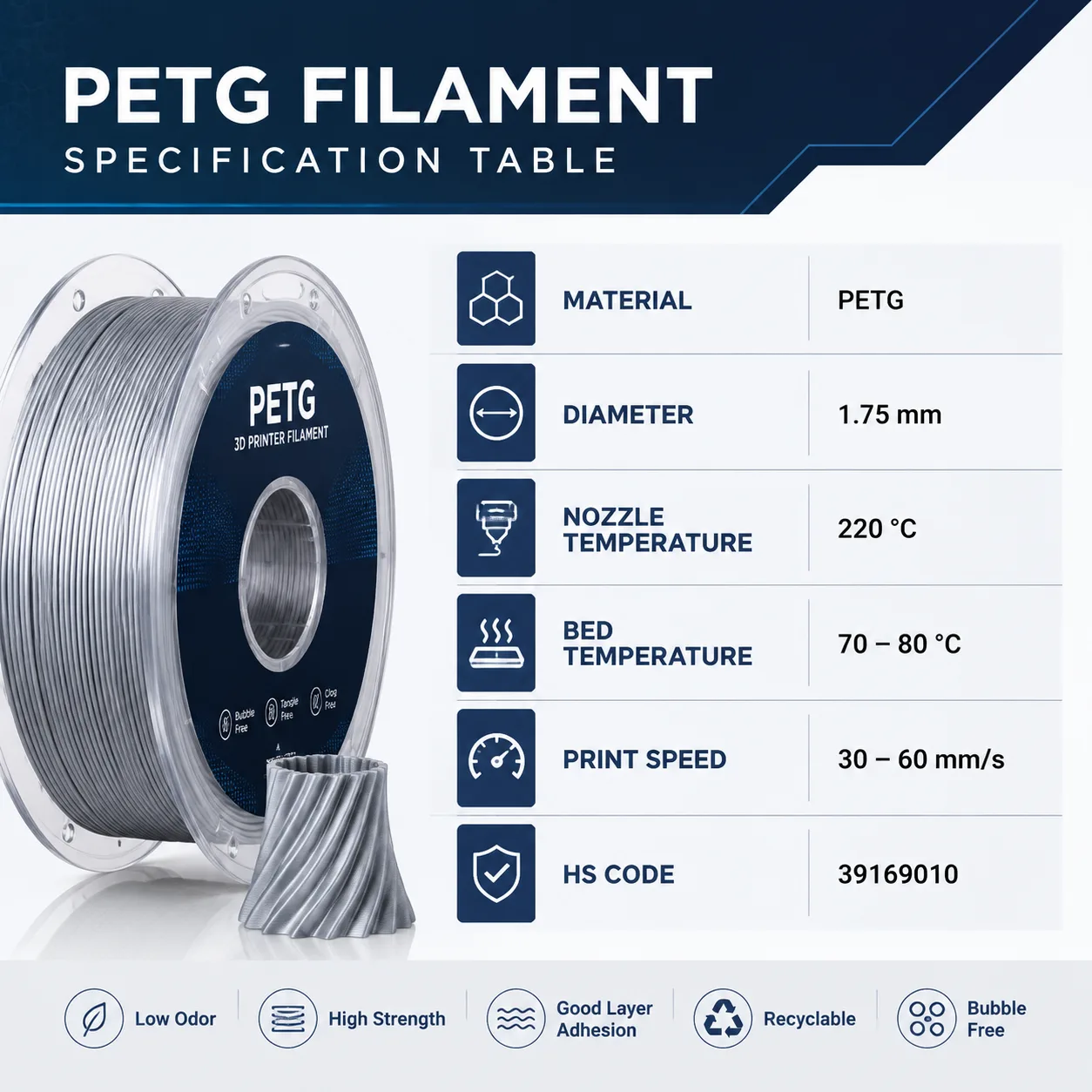
Diameter 1.75mm
Material PETG
Quick Answer

Why is PETG tougher than PLA for functional parts?

PETG's molecular structure resists impact and deformation better than PLA, withstanding service temperatures roughly up to 80 °C and absorbing knocks without shattering. It also resists moisture and many chemicals, which is why it is the default for functional and outdoor parts.

Full answers below
Is it right for my project?

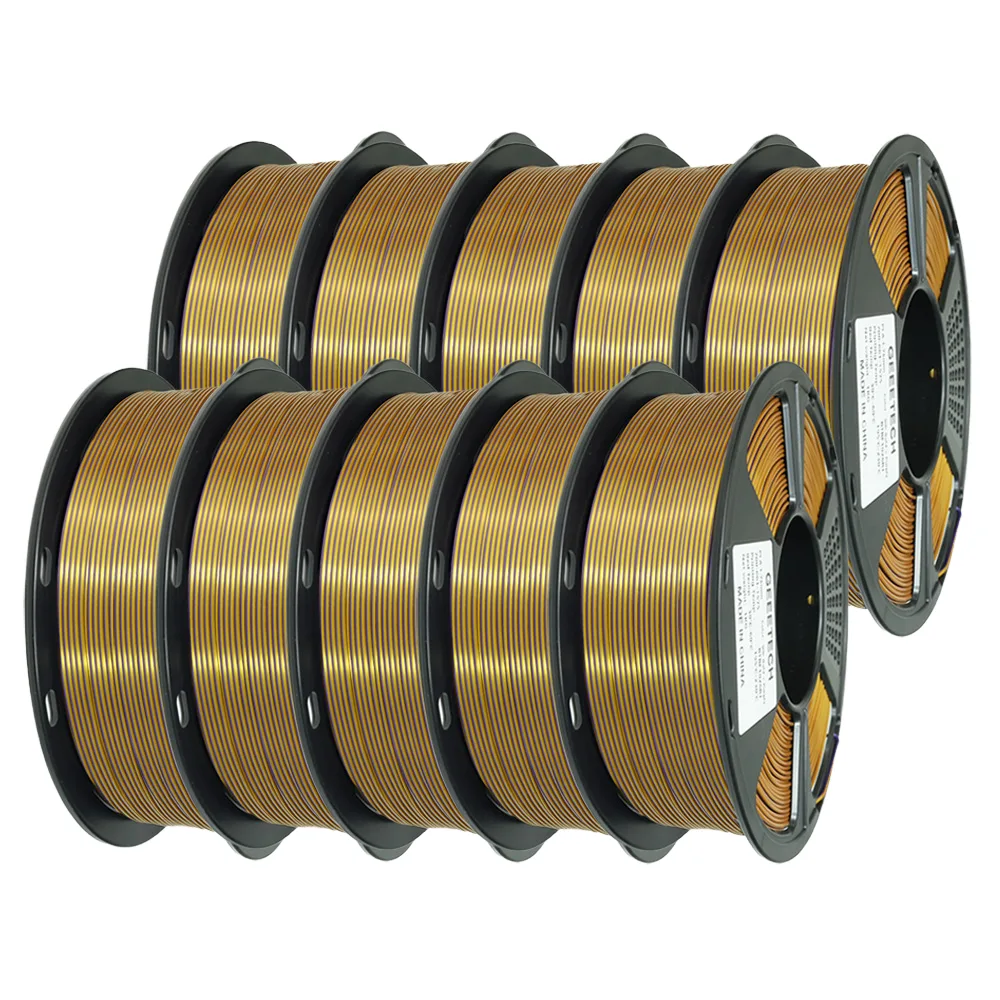
Best for: When a part must take knocks and humidity: functional prototypes, containers and mechanical housings - available in 3 colours; lead colour PETG Gold. Not ideal for: Not the pick for a glossy silk finish - choose silk PLA for decorative work - available in 3 colours; lead colour PETG Gold.

Print settings

Nozzle 230-260°C

01 · Why this one

Product highlights

3 reasons

Functional parts can look good too

the Silver and Coffee Gold metallic colors give brackets, mounts and enclosures a finished, professional appearance.

Impact, moisture and chemical resistance come standard: PETG shrugs off knocks and humidity, so it lasts in workshops, garages and outdoor gear.

Layer adhesion is PETG's superpower

strong inter-layer bonding means fewer split prints and more reliable structural parts at 220 °C on Bambu Lab, Creality, Prusa and Anycubic.

Available Colors

Technical Data

Specifications

Diameter 1.75mm
Material PETG

Print Profile

Factory Direct PETG prints best at 230-260°C nozzle.

Nozzle Temp230-260°C

Spool Specification

Spool details for your feeding and handling setup.

Gross Weight1.35 kg
Spool Size (L×W×H)20 × 20 × 6.5 cm
Pack FormatPiece
Spool TypeRound Spool

Attributes

Country / Regionchina
HS Code39169010
Item No.factory-direct-petg-3d-printer-filament-silver-coffee-gold
Diameter 1.75mm
Appearance Round Spool
Before You Ask

Frequently Asked Questions

Why is PETG tougher than PLA for functional parts?
PETG's molecular structure resists impact and deformation better than PLA, withstanding service temperatures roughly up to 80 °C and absorbing knocks without shattering. It also resists moisture and many chemicals, which is why it is the default for functional and outdoor parts.
Will this 1.75 mm PETG work in my printer?
Yes — 1.75 mm PETG feeds Bambu Lab, Creality, Prusa, Anycubic and most FDM machines. It prints without an enclosure, though one helps for large parts in cold rooms.
What settings do you recommend for PETG?
Nozzle 220 °C as marked, bed 70-80 °C, speed 30-60 mm/s. Use low or no part cooling for maximum layer adhesion, and slow down the first layer for a strong, even squish.
How much can I print with one spool?
A standard spool holds roughly 330 m of 1.75 mm filament — enough for 30-70 functional parts like brackets, cable guides and enclosures, depending on size and infill.
Are Silver and Coffee Gold consistent between batches?
Yes — both metallic colors use fixed pigment recipes and are matched to master swatches, so brackets and enclosures from different reorders match in tone.
What print speed is best for PETG?
30-60 mm/s is the reliable range. PETG likes slower, steadier extrusion; above 80 mm/s, layer adhesion can weaken, so keep functional parts in the recommended band.
Is PETG for prototypes or end-use parts?
End-use parts — PETG is a production-grade material for jigs, brackets, enclosures, automotive interior helpers and outdoor accessories that must endure real conditions.
How is PETG stored and shipped?
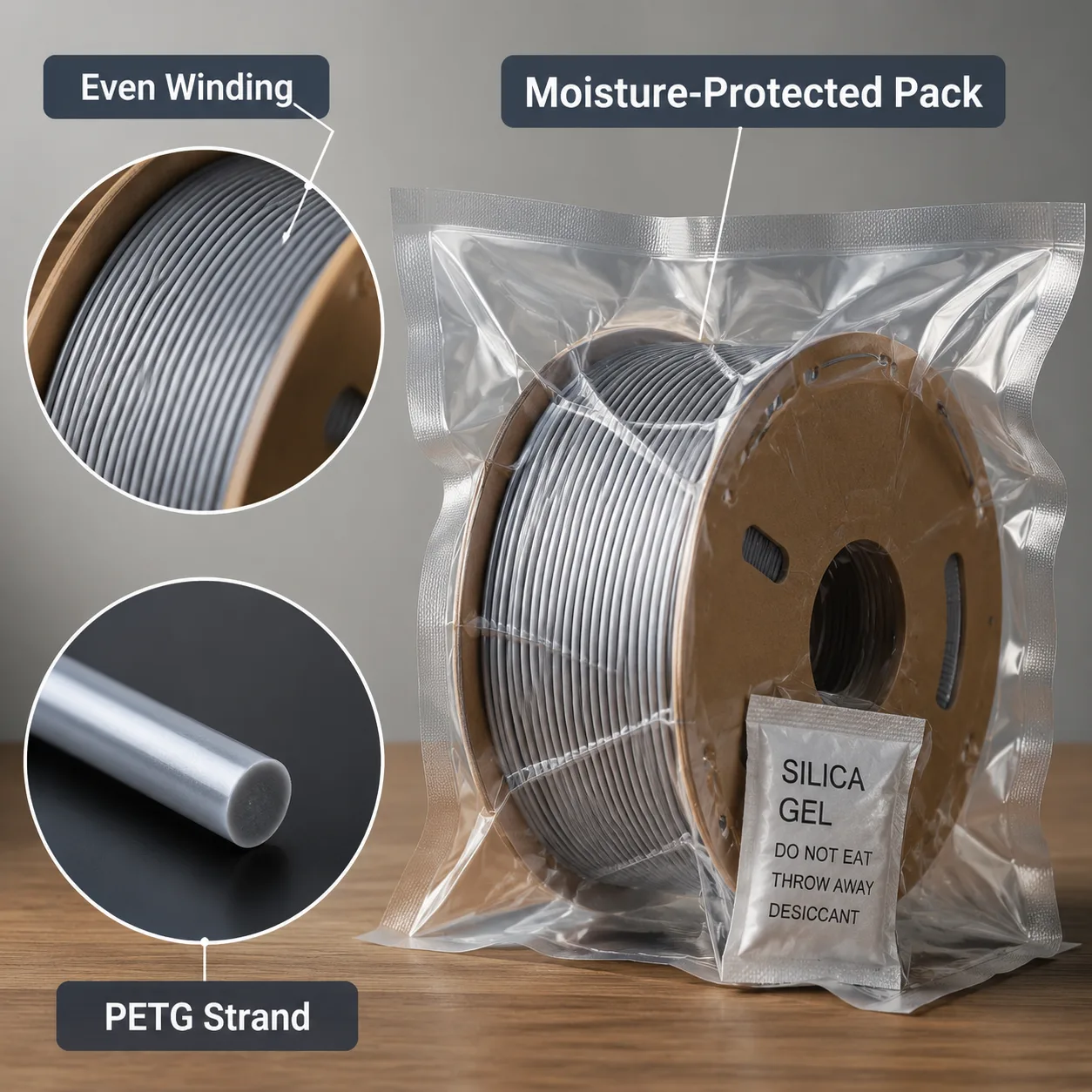
PETG absorbs moisture faster than PLA, so every spool is vacuum-sealed with a desiccant pouch. Dry opened spools before long prints, ideally in a filament dryer, and store below 25 °C.

Documentation & Downloads

Everything we publish for this material, in one place.