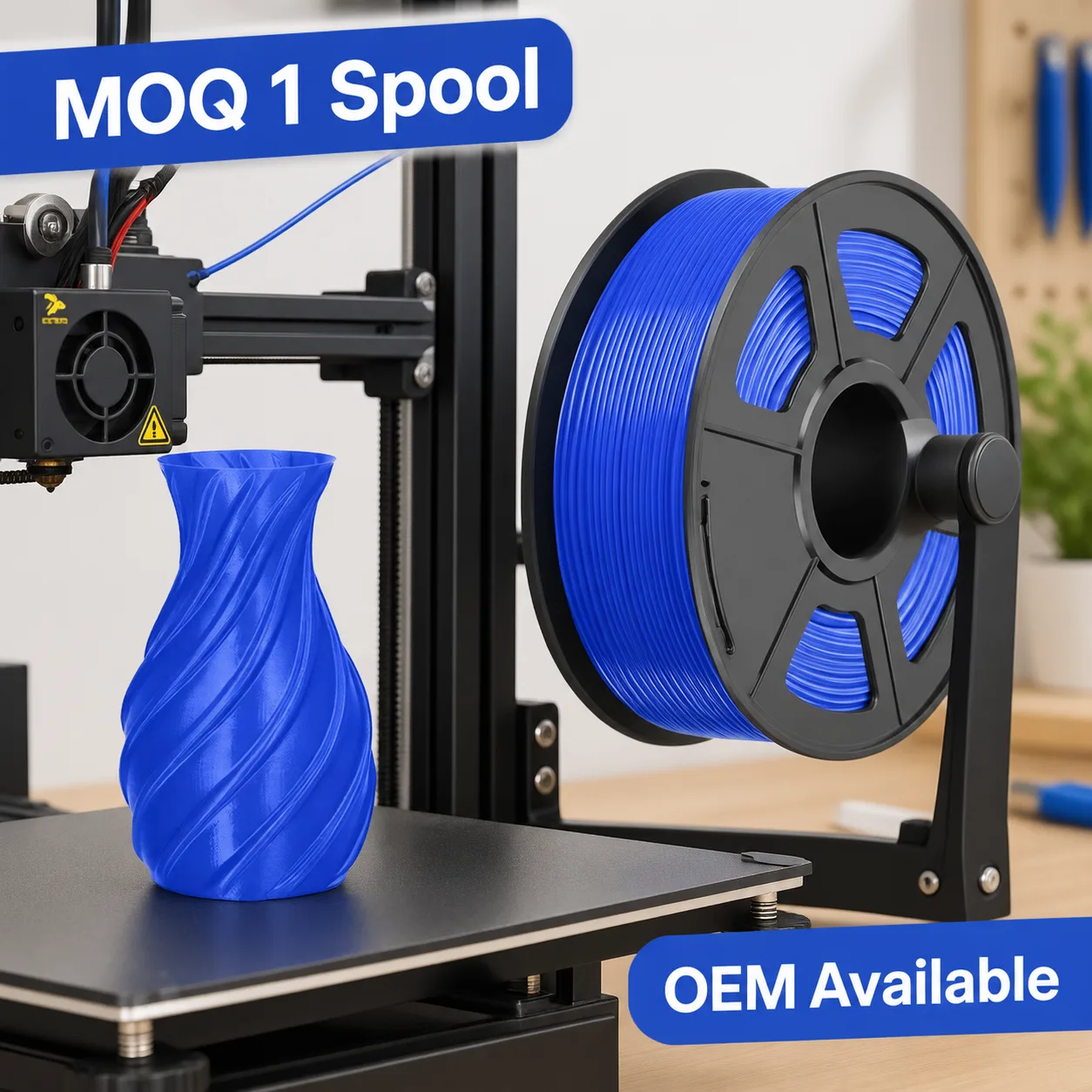
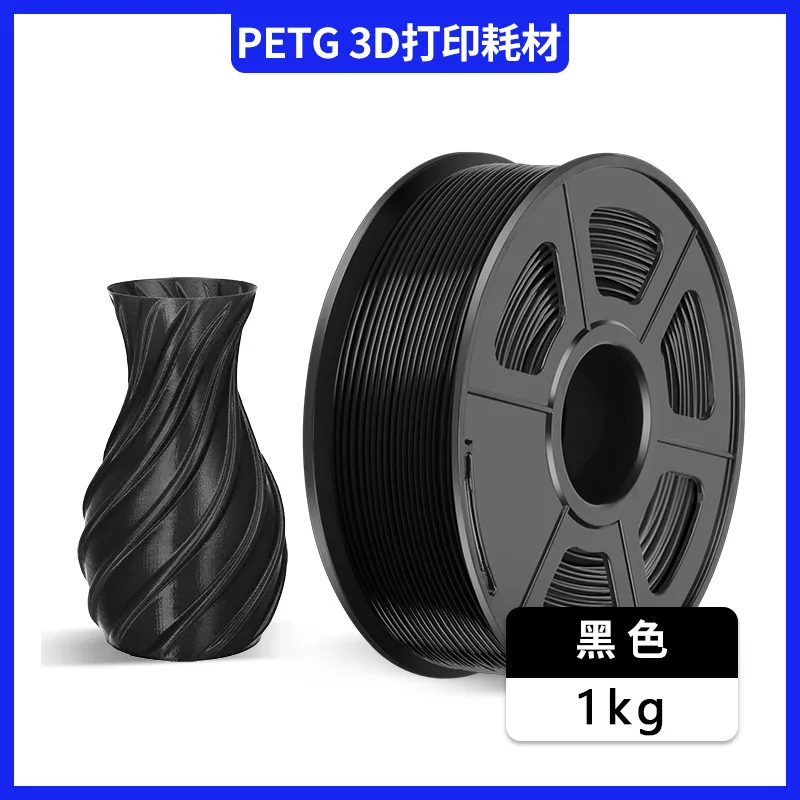
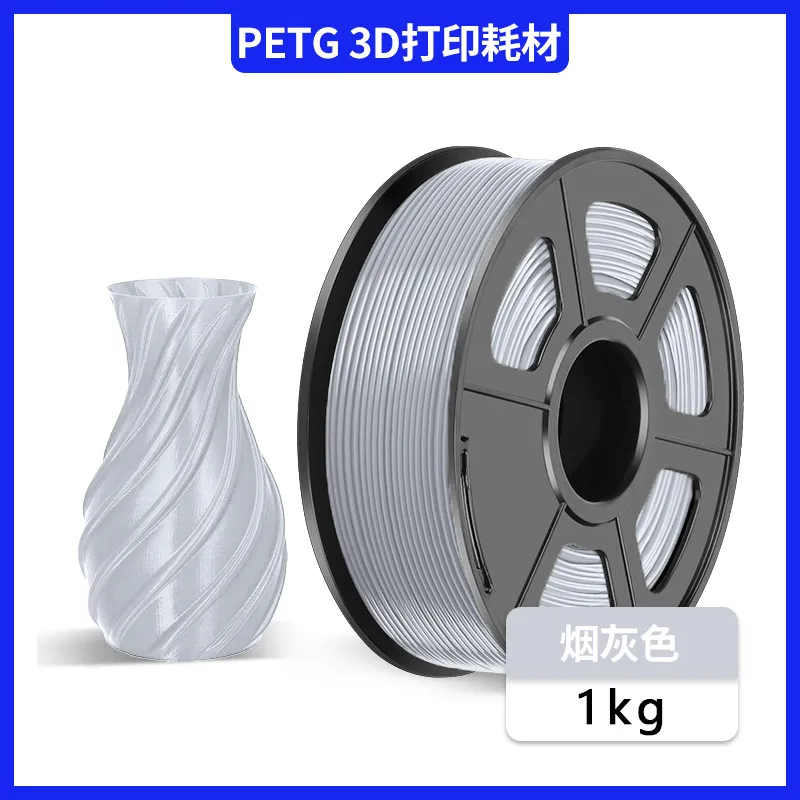
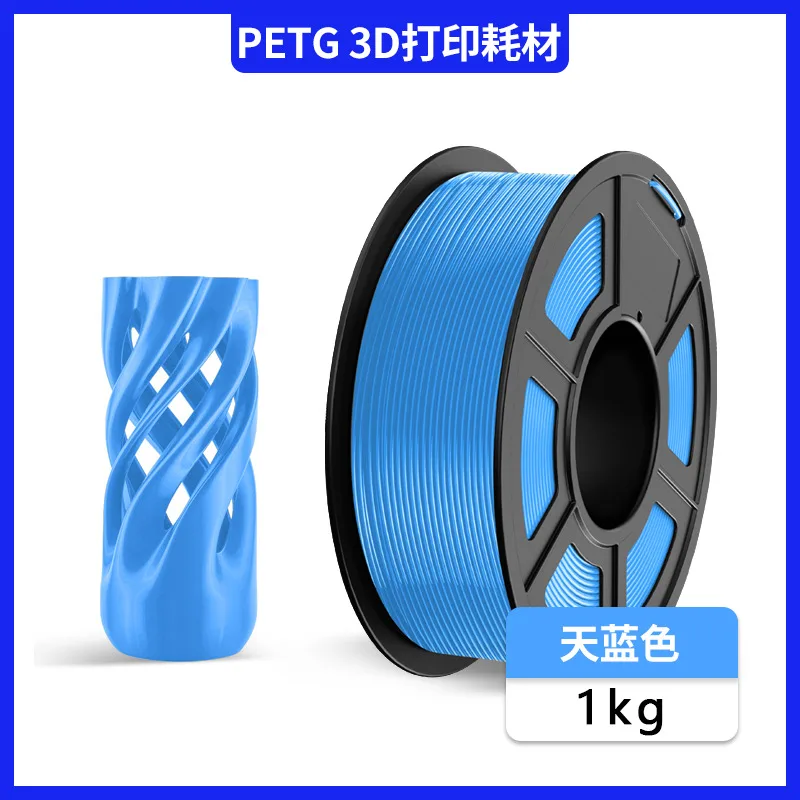
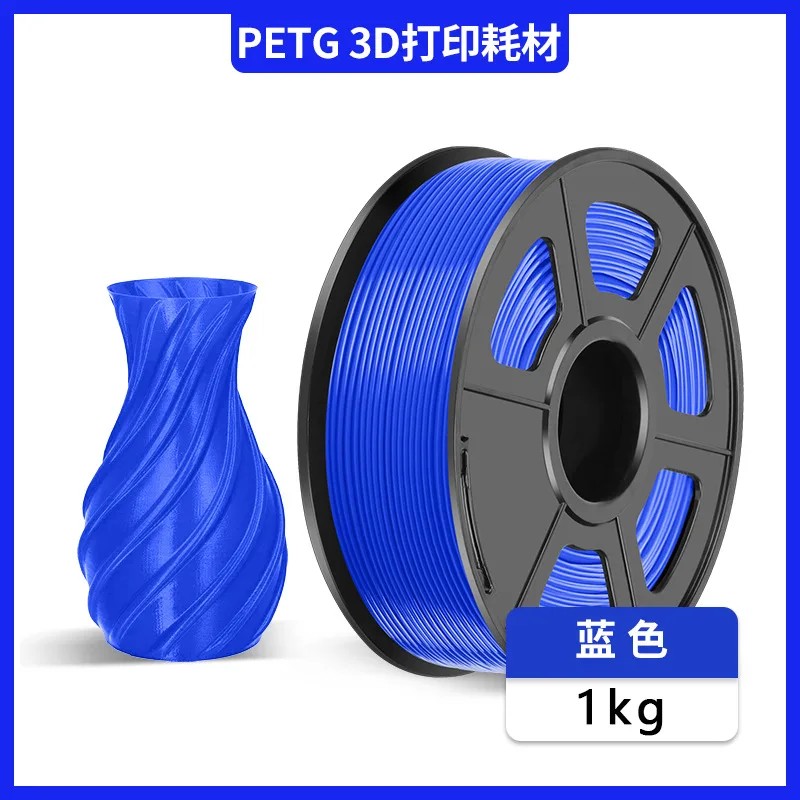
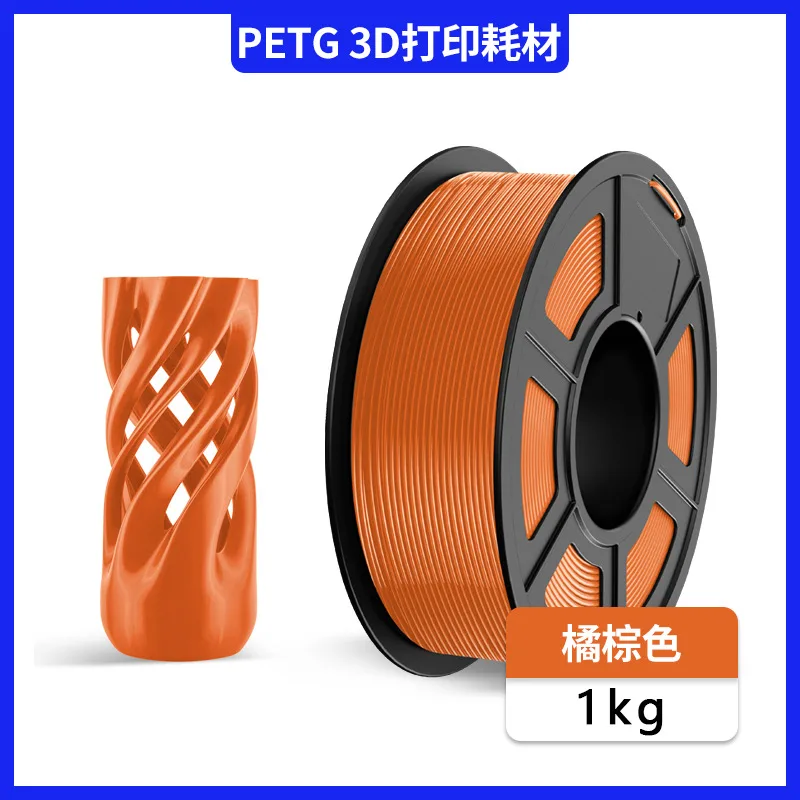
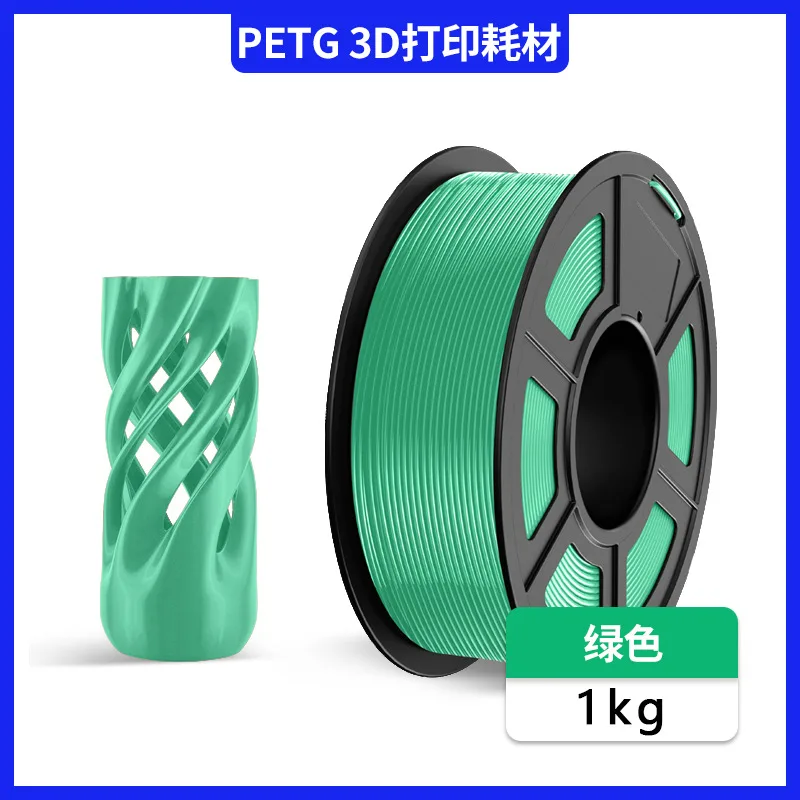
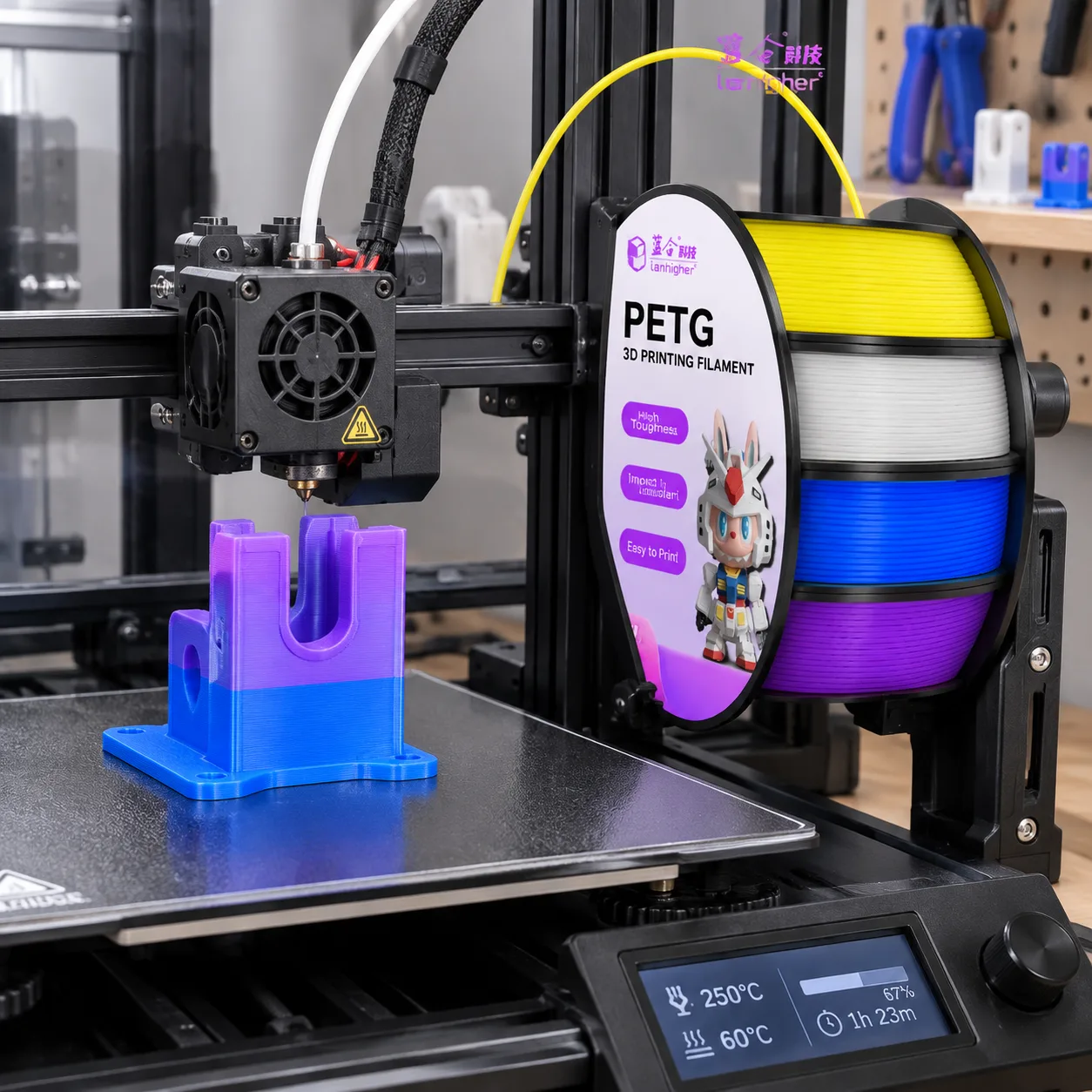
Blue Harmony 1.75mm 1KG PETG Filament High Toughness Easy Molding 8 Colors

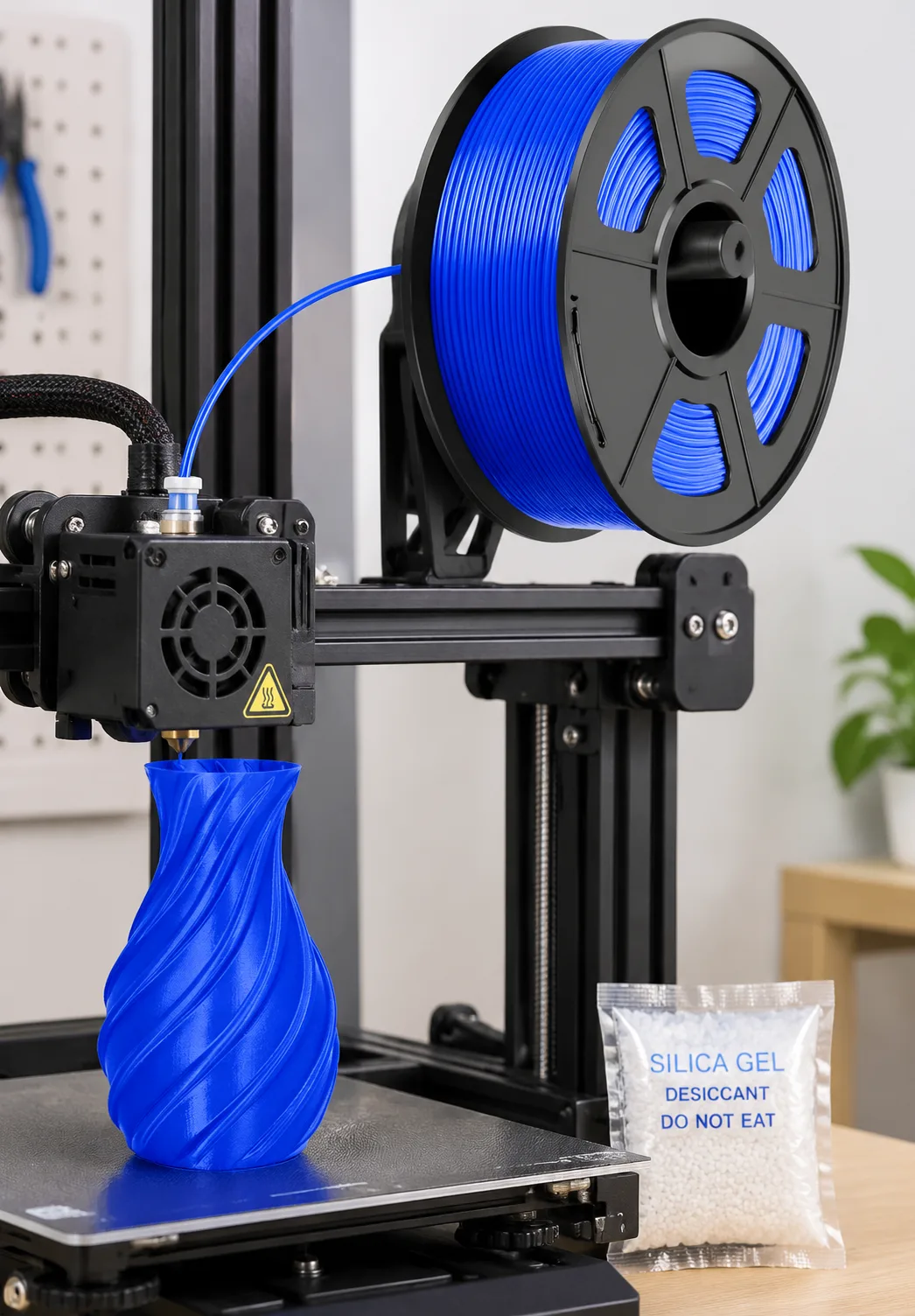
Brand: Yiqiu3D · A PETG part rarely fails in service - it cracks on the way there: a bracket takes one knock in transit or on the bench and the layer bond lets go. This grade is formulated for impact and moisture resistance rather than cosmetics, so a printed clip, hinge or shop jig absorbs the hit and stays square instead of shattering. 1 kg net filament per spool, vacuum-sealed with desiccant, so toughness does not arrive as a wet, popping strand.

  • Lead colour is White
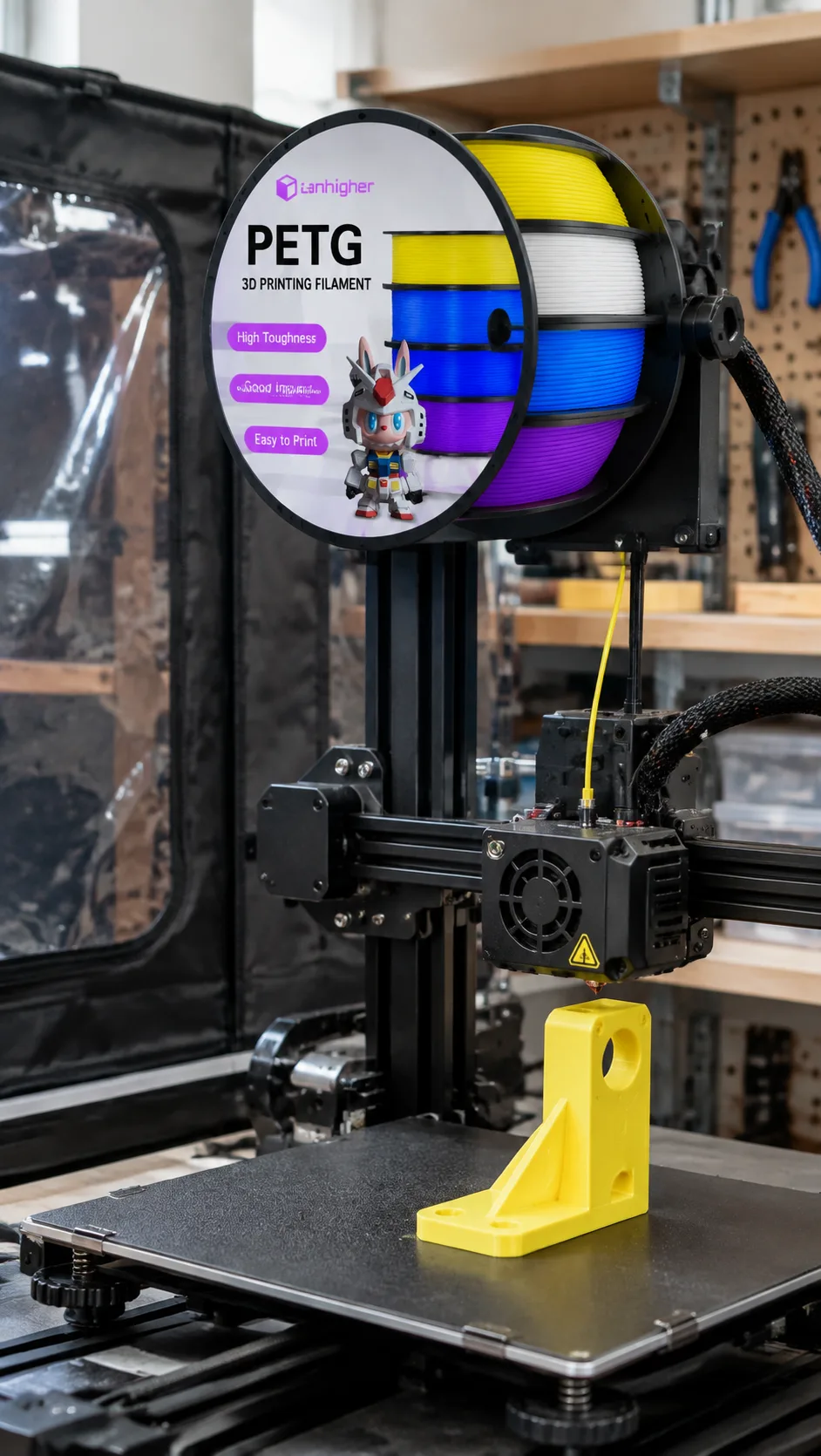
  • Runs on the open-frame 1.75mm FDM machine already on the floor - no heated chamber and no ventilation build-out
  • no firmware change
Compare filaments
Diameter 1.75mm
Material PETG
Quick Answer

What does PETG do better than PLA or ABS as a general engineering material?

PETG sits between the two. It takes impact and loads far better than PLA, which is stiff but brittle and lets go suddenly. It also tolerates humidity and many chemicals, where PLA slowly hydrolyses and goes brittle. Against ABS it trades peak heat resistance for easier processing: it bonds layers reliably and prints on an open-frame machine with no heated chamber. For brackets, clips, jigs, enclosures and parts near water, that combination is usually the practical choice.

Full answers below
Is it right for my project?

Best for: For durable, moisture- and chemical-resistant parts - outdoor enclosures, brackets and water-adjacent jigs - available in 9 colours; 1kg spools; lead colour PETG White. Not ideal for: Not for high-temperature engine-adjacent parts; use ABS or PC above ~70C - available in 9 colours; 1kg spools; lead colour PETG White.

Print settings

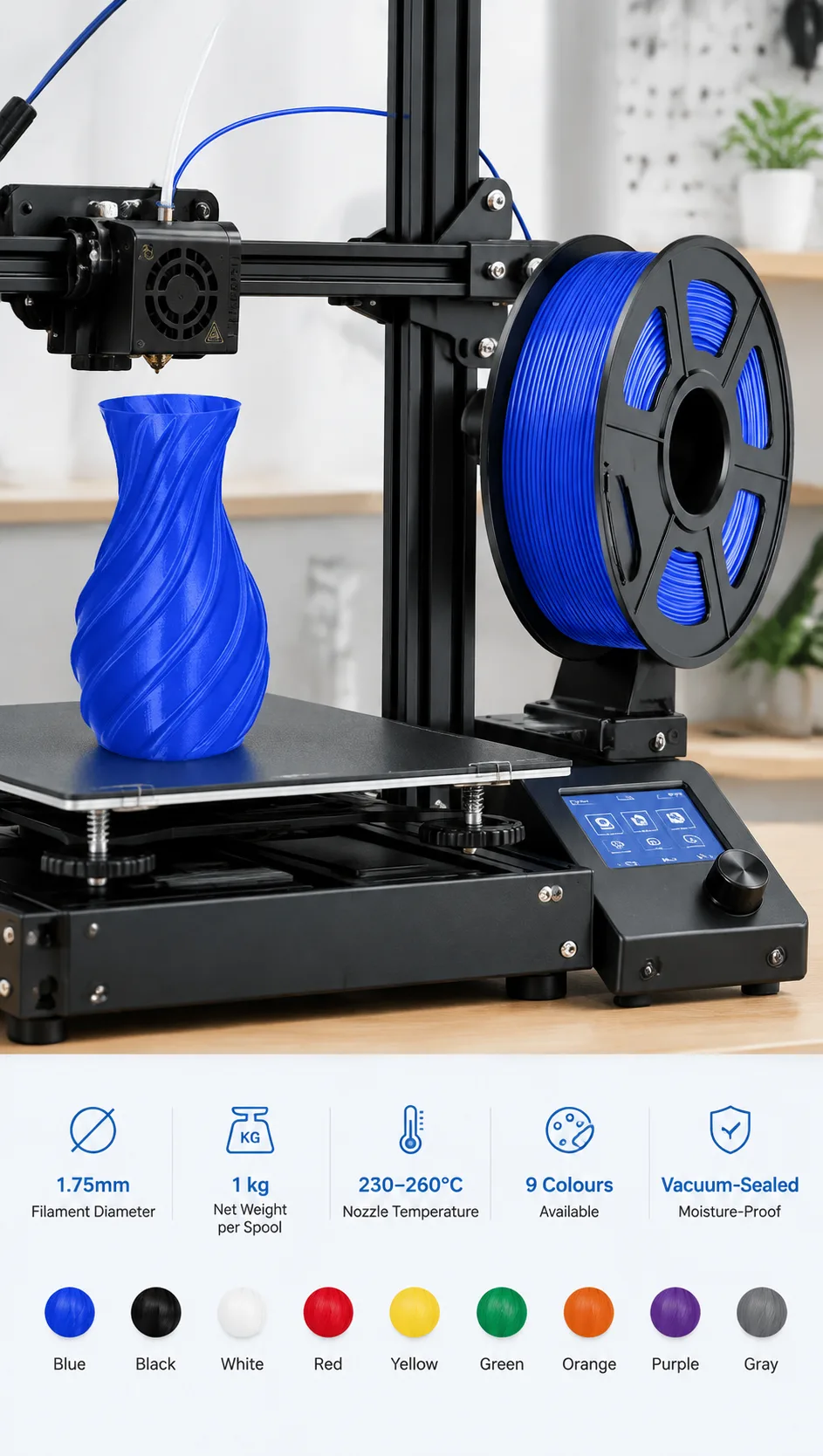
Nozzle 230-260°C

01 · Why this one

Product highlights

3 reasons

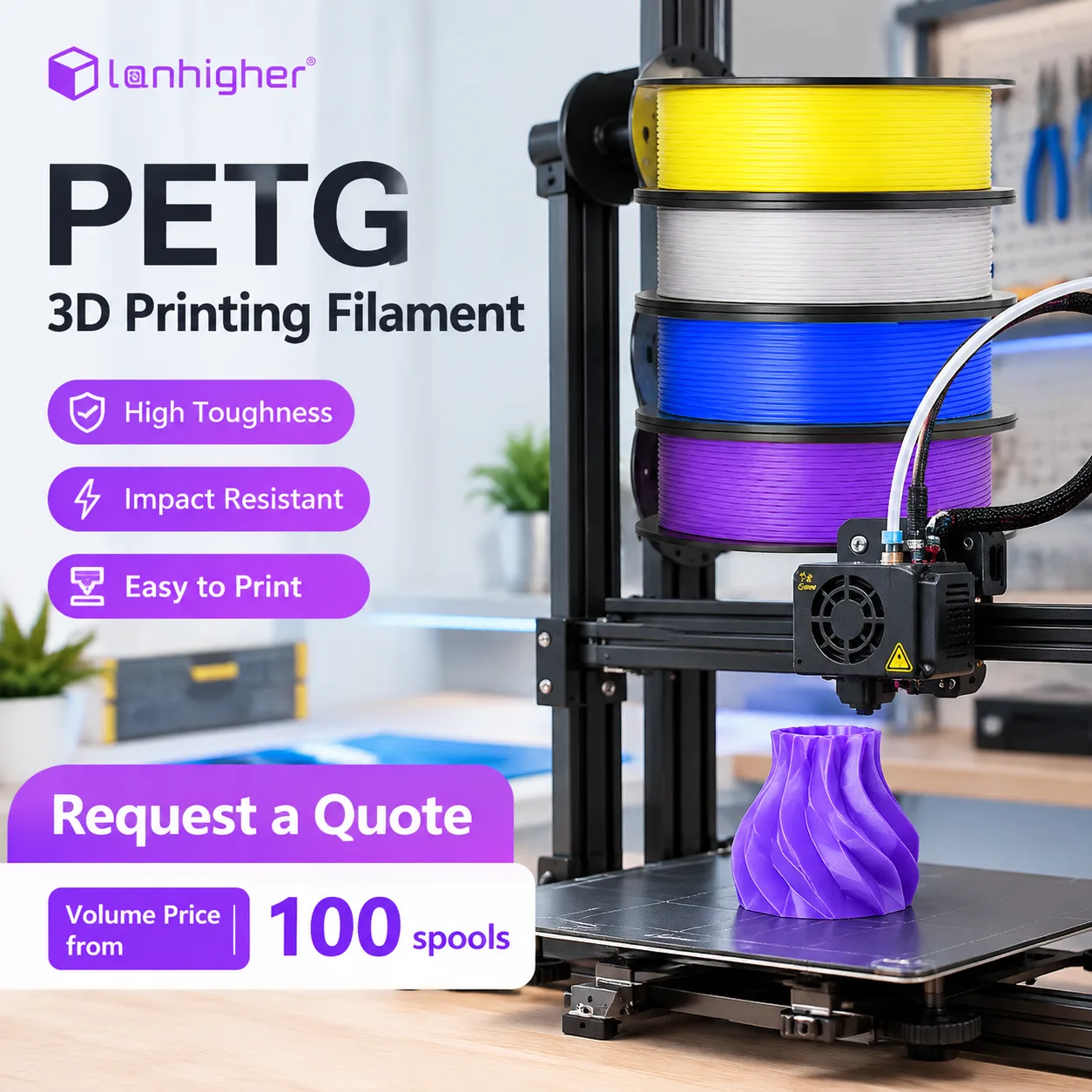
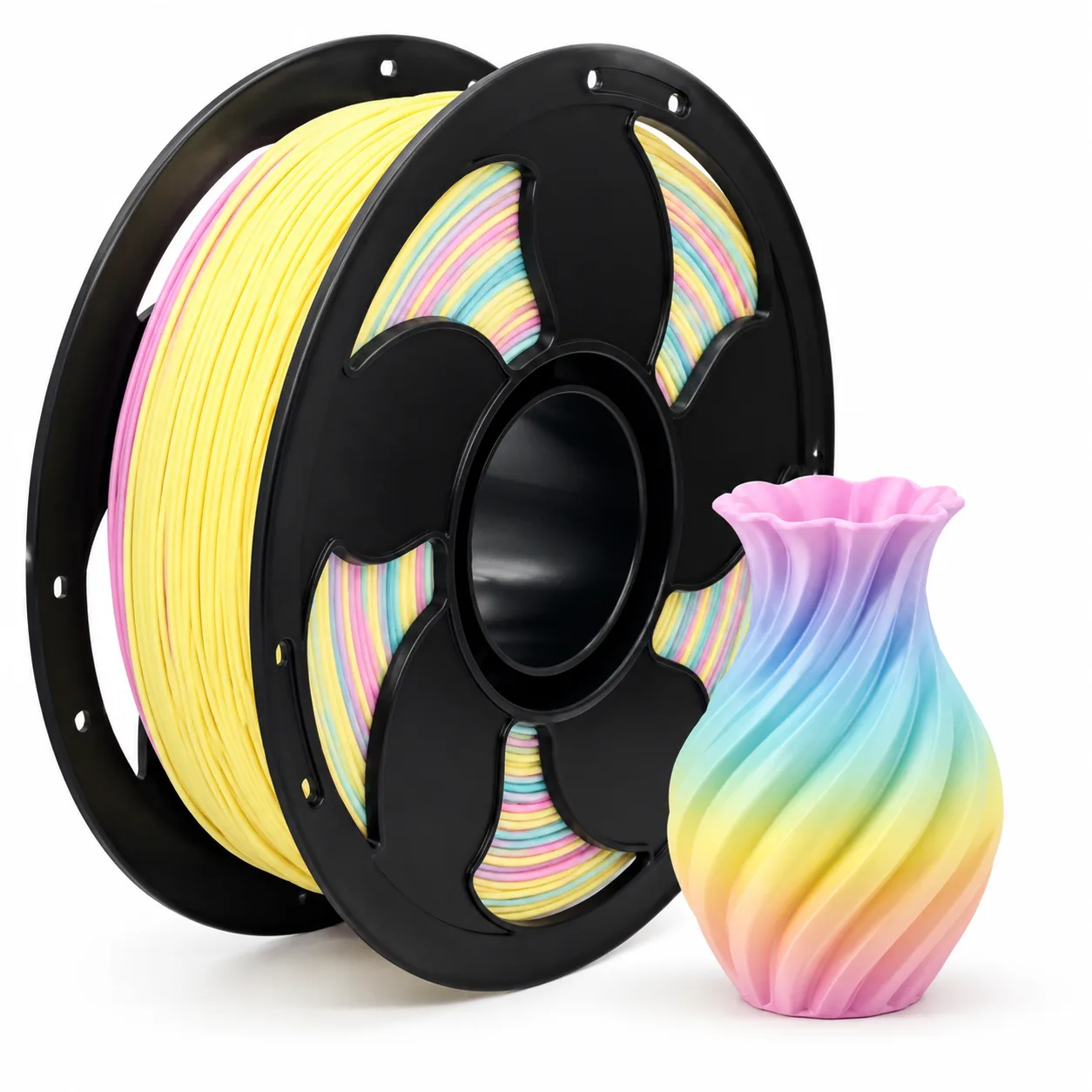
Lead colour is White, and White is the practical lead for a print farm or an OEM batch: extrusion faults, under-extrusion and surface scuffs show up on a white part at the machine, before the part reaches a customer. The same range carries nine colours - White, Black, Gray, Ash Gray, Sky Blue, Blue, Jungle Green, Brown and Green - matched against retained swatches on repeat orders.

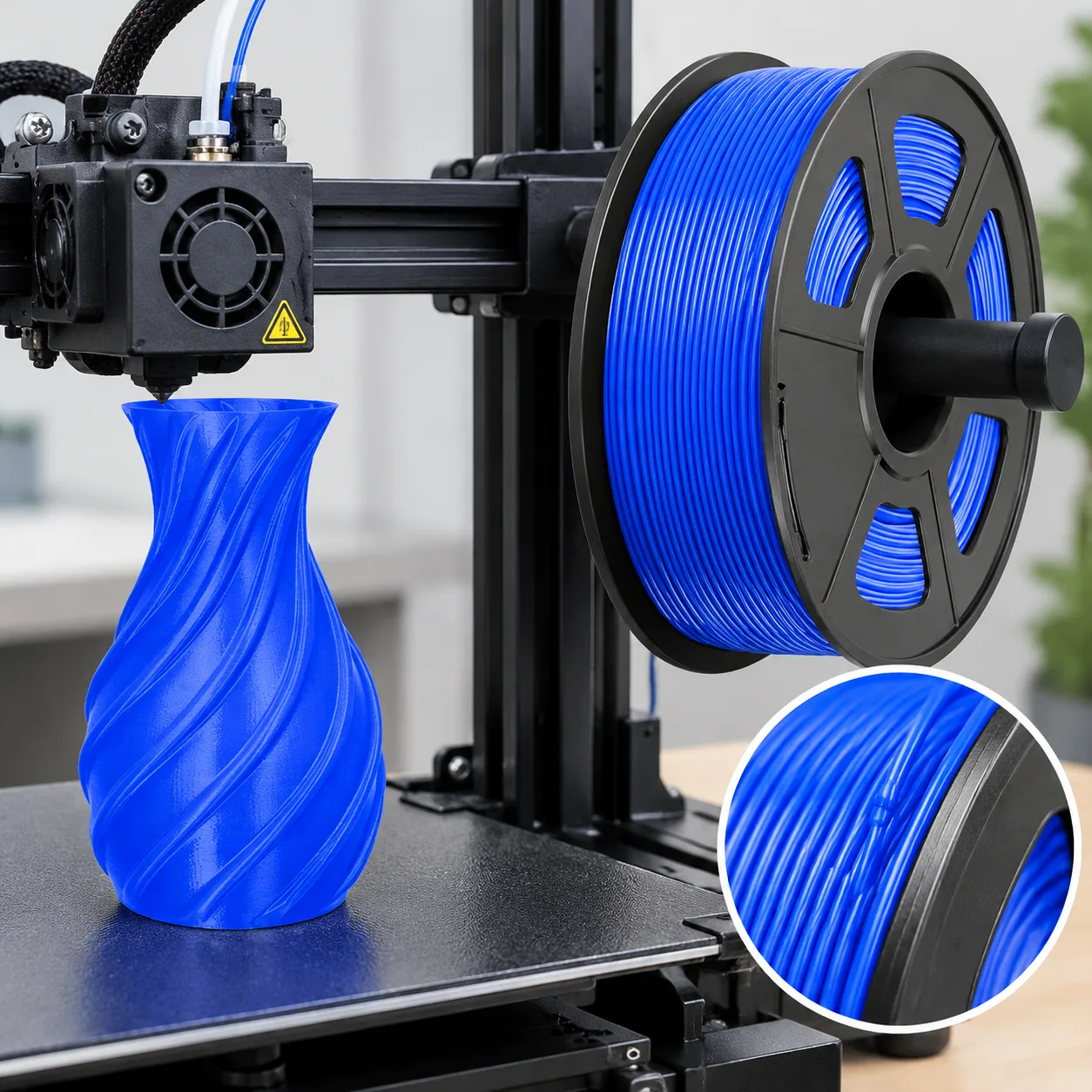
Runs on the open-frame 1.75mm FDM machine already on the floor - no heated chamber and no ventilation build-out, which is the difference between this grade and the styrenic materials. Nozzle temperature 230-260 °C on Bambu Lab, Creality, Prusa, Elegoo and similar hardware

no firmware change, slice it on your usual profile and tune inside that window.

Technical Data

Specifications

Diameter 1.75mm
Material PETG

Print Profile

Blue Harmony 1.75mm 1KG PETG Filament High Toughness Easy Molding 8 Colors prints best at 230-260°C nozzle.

Nozzle Temp230-260°C

Spool Specification

Spool details for your feeding and handling setup.

Gross Weight1.3 kg
Spool Size (L×W×H)25 × 25 × 8 cm
Pack FormatKg

What You Receive

A PETG part rarely fails in service - it cracks on the way there: a bracket takes one knock in transit or on the bench and the layer bond lets go. This grade is formulated for impact and moisture resistance rather than cosmetics, so a printed clip, hinge or shop jig absorbs the hit and stays square instead of shattering. 1 kg net filament per spool, vacuum-sealed with desiccant, so toughness does not arrive as a wet, popping strand.

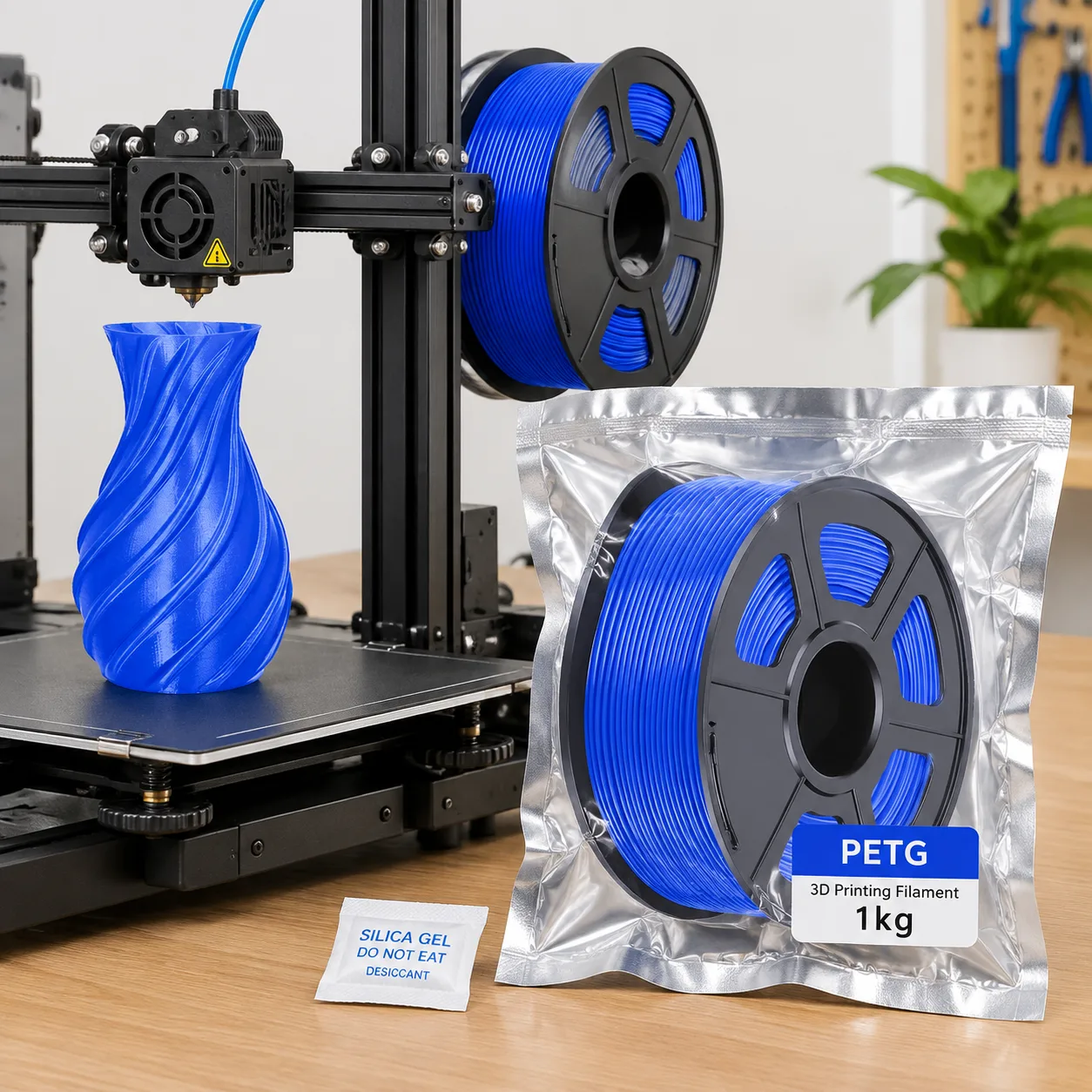
  • Vacuum-sealed bag
  • Desiccant pack
  • Arrives dry and ready to print

Attributes

Country / Regionchina
HS Code39169010
Item No.blue-harmony-petg-toughness-easy-molding
Material PETG
Origin Shandong
Item No. LH-PETG
Order Number Other
Suitable for Material Other
Printing accuracy Other
Applicable Scenarios 3DPrinting
Before You Ask

Frequently Asked Questions

What does PETG do better than PLA or ABS as a general engineering material?
PETG sits between the two. It takes impact and loads far better than PLA, which is stiff but brittle and lets go suddenly. It also tolerates humidity and many chemicals, where PLA slowly hydrolyses and goes brittle. Against ABS it trades peak heat resistance for easier processing: it bonds layers reliably and prints on an open-frame machine with no heated chamber. For brackets, clips, jigs, enclosures and parts near water, that combination is usually the practical choice.
Which printers is this filament compatible with?
Any standard 1.75mm FDM printer that can reach 230 °C at the nozzle: Bambu Lab, Creality, Prusa, Elegoo, Anycubic and similar machines, enclosed or open-frame. No hardened nozzle is required for this unfilled grade and no firmware change is needed. A slightly wider nozzle-to-plate gap than PLA is the usual first adjustment, because PETG bonds strongly to a plate that is too close.
What print temperature do you recommend?
Nozzle temperature 230-260 °C. Start around the middle of that window on your own machine and tune by layer adhesion and surface finish: the lower end gives crisper detail and cleaner bridges, the upper end gives stronger layer bonding for load-bearing parts. We do not publish a build-plate temperature for this grade - use the plate preparation your printer profile already specifies for PETG.
How much filament is on one spool?
1 kg net filament per spool at 1.75mm diameter. The net figure is filament, not spool plus packaging, and the weight is stated on the spool label. We do not quote a metre figure for this grade because usable length varies with the exact formulation and winding tension; take the length from your slicer estimate for the actual part. Winding is even and tangle-free, which matters on long prints where a single tangle scraps the job.
Which colours are available, and is colour consistent between batches?
Nine colours: White (lead colour), Black, Gray, Ash Gray, Sky Blue, Blue, Jungle Green, Brown and Green. Colour is matched against retained reference swatches, so a repeat order arrives in the same tone as the sample that was approved, and a print farm can keep one colour across a production run instead of mixing batches. Send us the colour mix and quantities you need and we will confirm what ships.
What are the typical applications for this PETG grade?
Durable parts that meet moisture, humidity or the occasional knock: outdoor enclosures, brackets, water-adjacent jigs and fixtures, containers, mounts, replacement knobs and functional prototypes. It is also widely used where a printed part must survive handling in a workshop rather than sit on a shelf. It is not for high-temperature service - above roughly 70 °C an ABS or polycarbonate grade is the better fit, and we will advise on the right one.
How is the filament packed, and how should it be stored?
Every spool is vacuum-sealed with a desiccant sachet inside a sealed foil bag, so it arrives dry and ready to print. Store unopened spools between 15 and 25 °C out of direct sunlight, and reseal the bag or move the spool into a dry container once opened. PETG absorbs moisture over time; a wet strand pops at the nozzle and lays down a cloudy, weaker wall, which is exactly the failure this grade is bought to avoid.

Documentation & Downloads

Everything we publish for this material, in one place.

Ready to Order

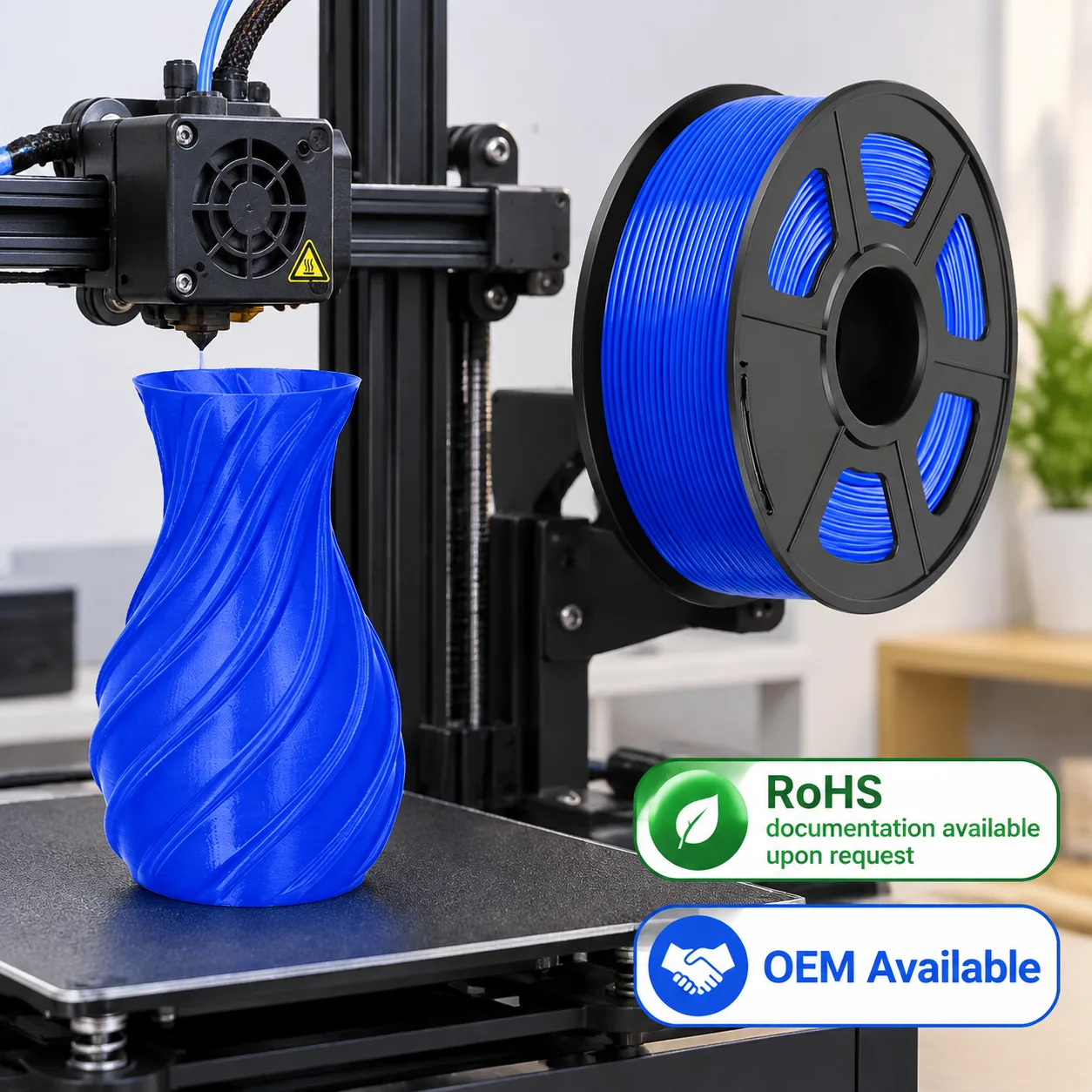
Get factory-direct pricing on Blue Harmony 1.75mm 1KG PETG Filament High Toughness Easy Molding 8 Colors

Not sure this is the right material? → Compare filaments