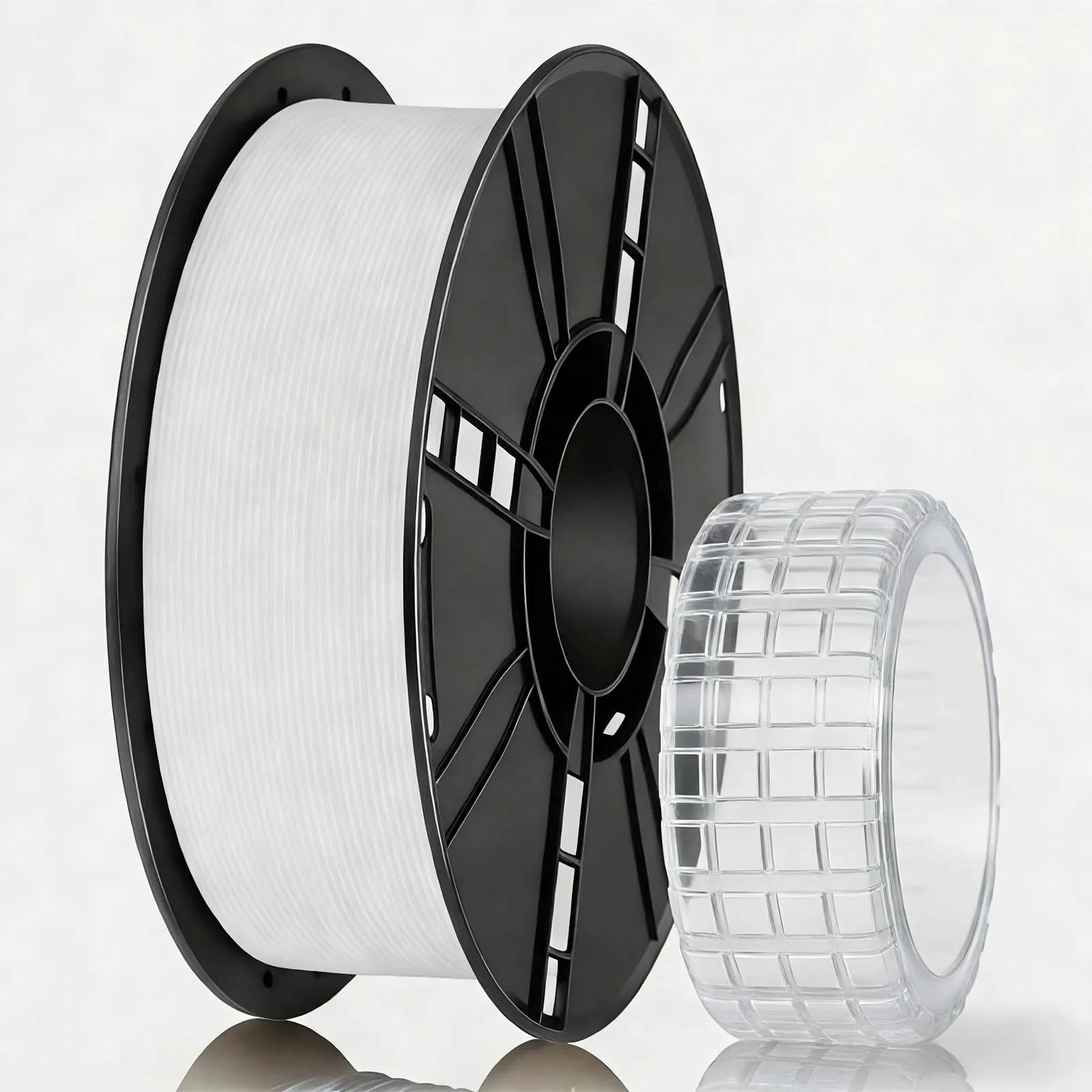
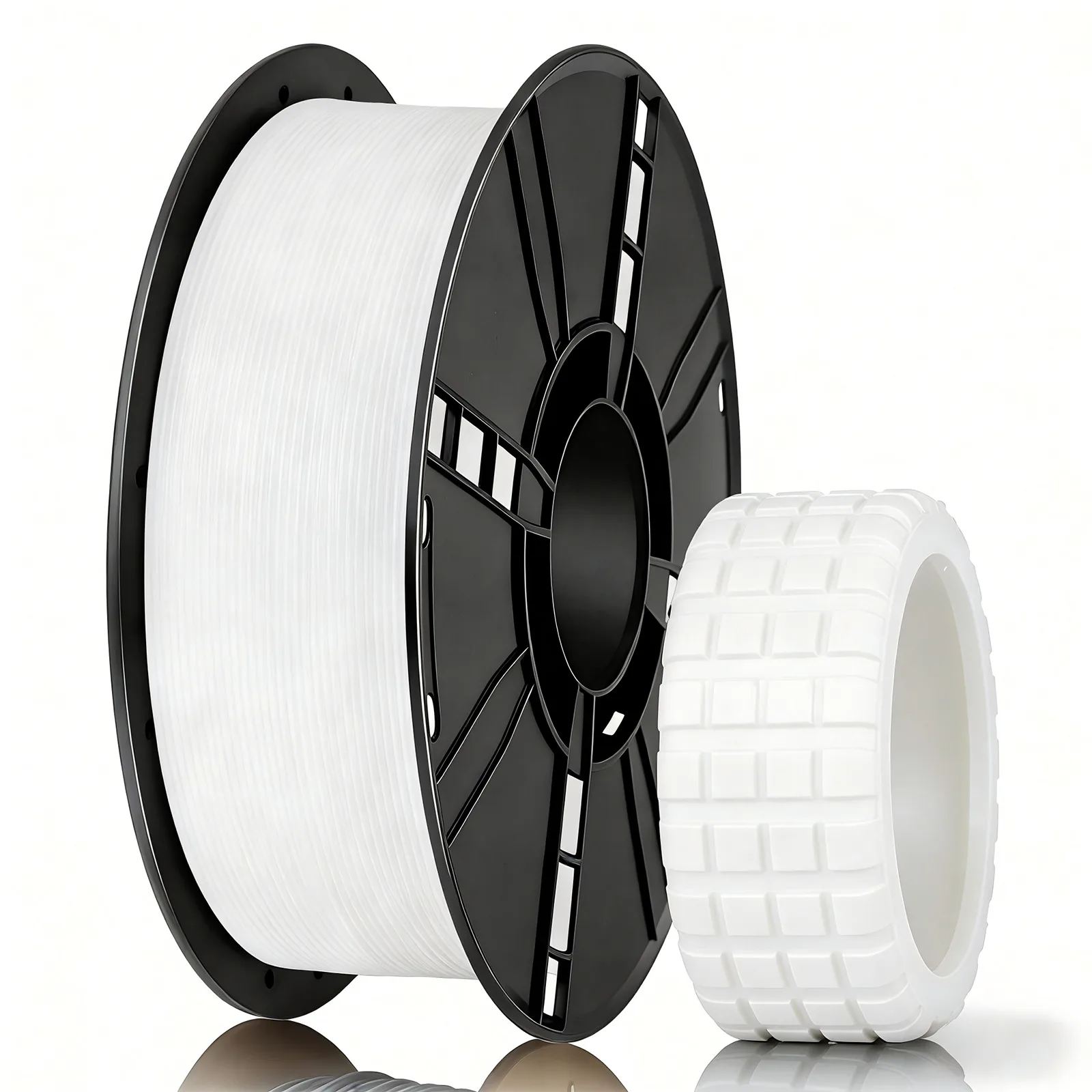
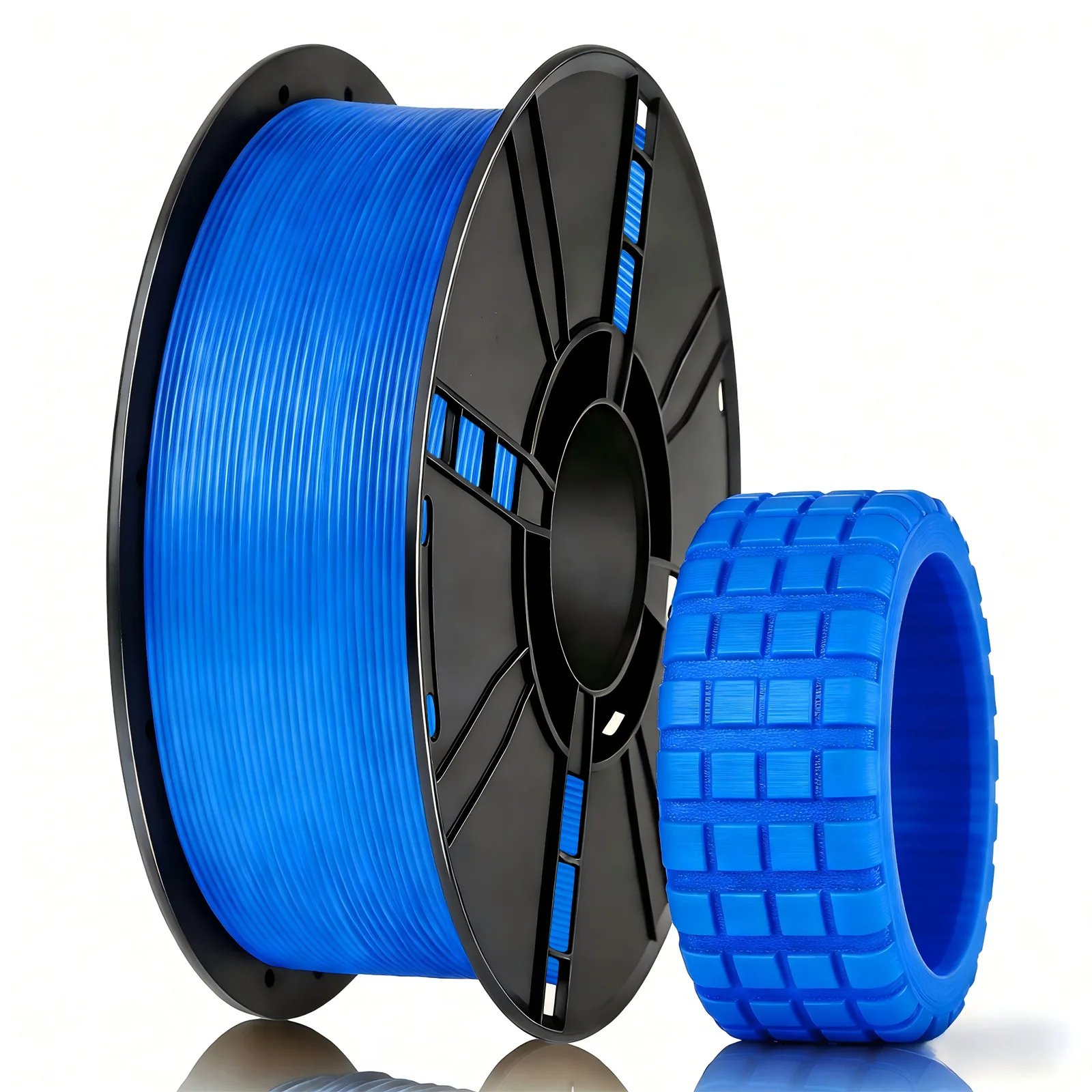
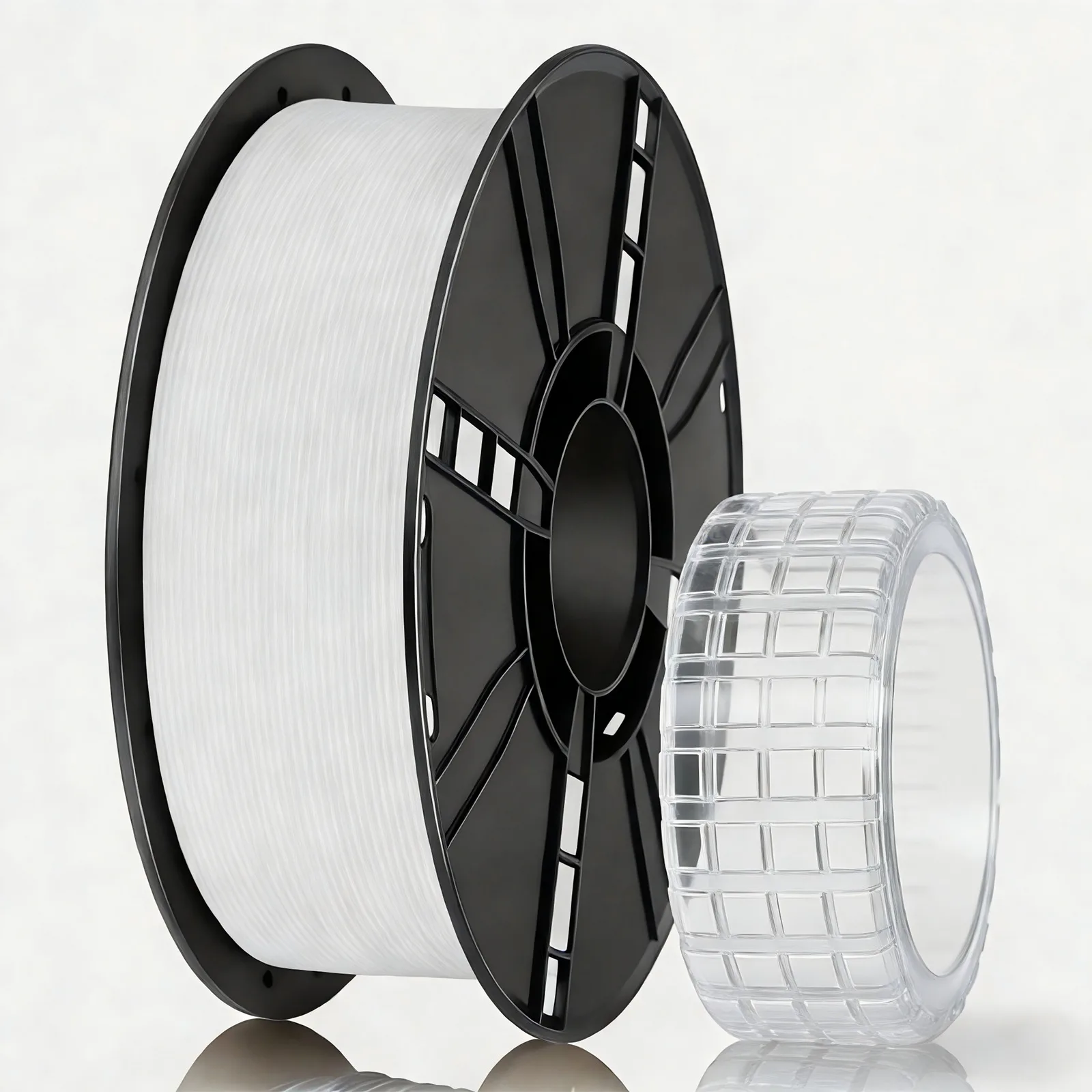
TPU 95A 1.75mm 1KG

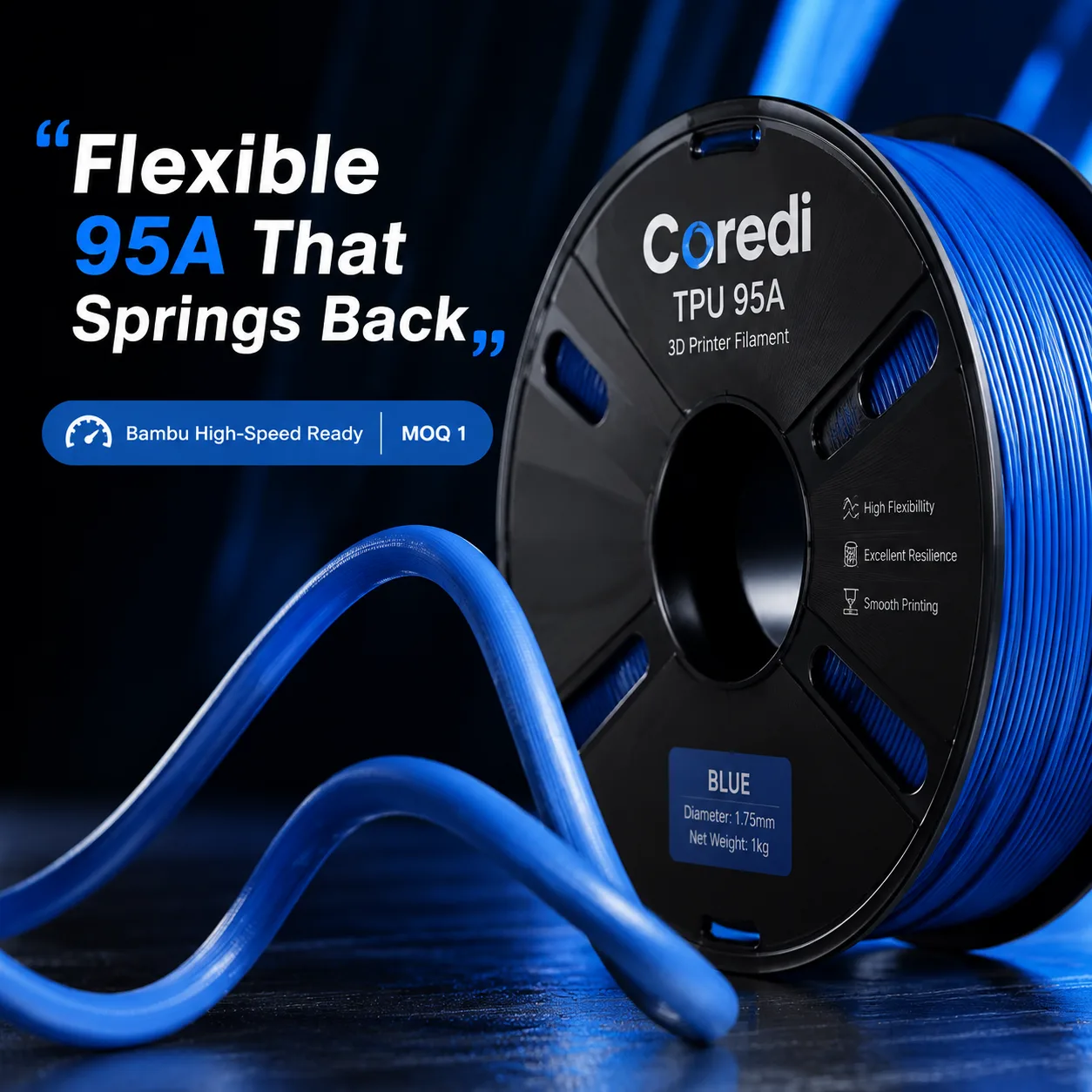
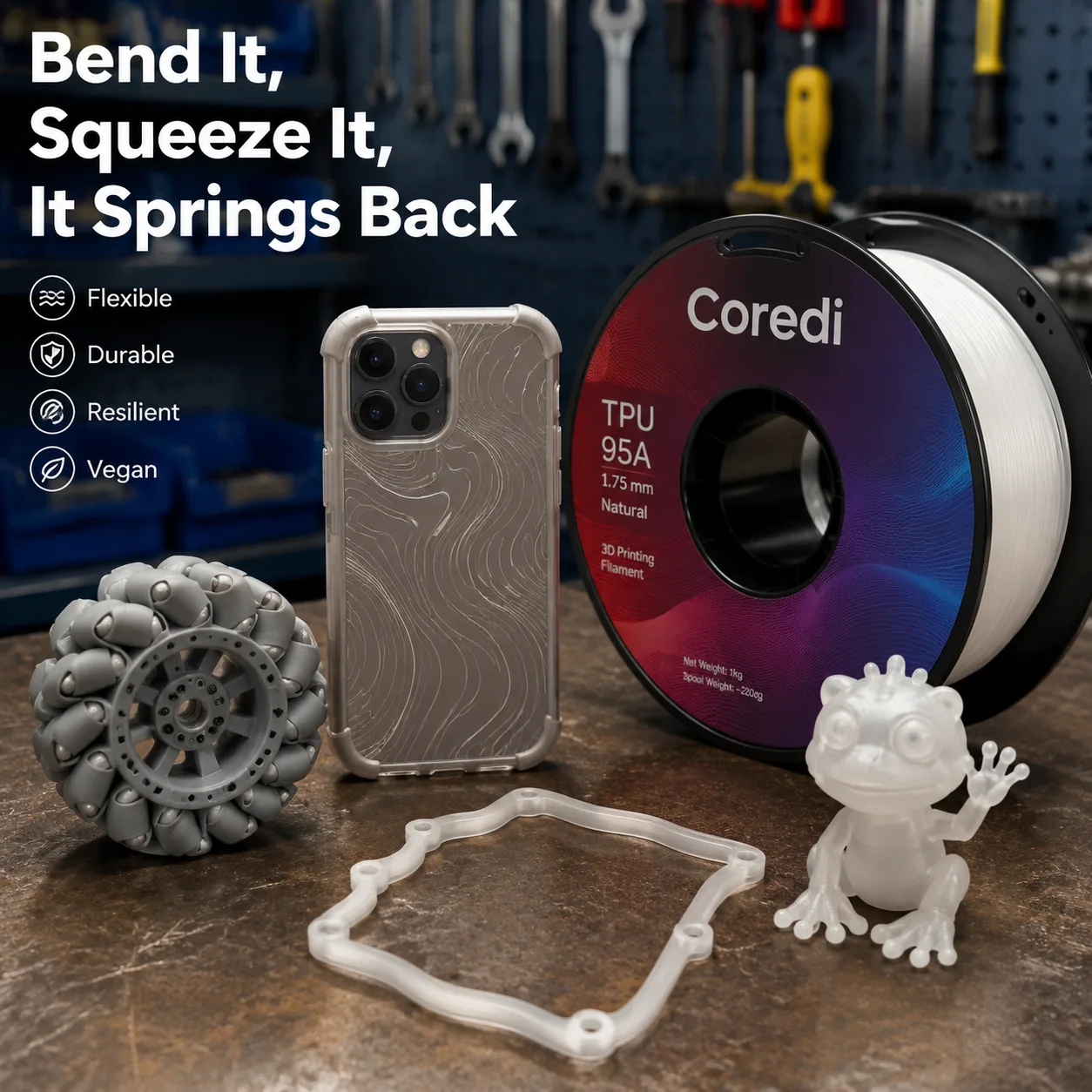
Brand: Yiqiu3D · Model: TPU(Black)1KG,TPU(White)1KG,TPU(Red)1KG,TPU(Blue)1KG,TPU(Transparent Color)1KG · Frustrated by rigid parts that crack under shock and vibration? Our TPU 95A flexes, absorbs impact and springs back — ideal for phone cases, gaskets, robot wheels and wearable parts that ordinary PLA and ABS can't survive.

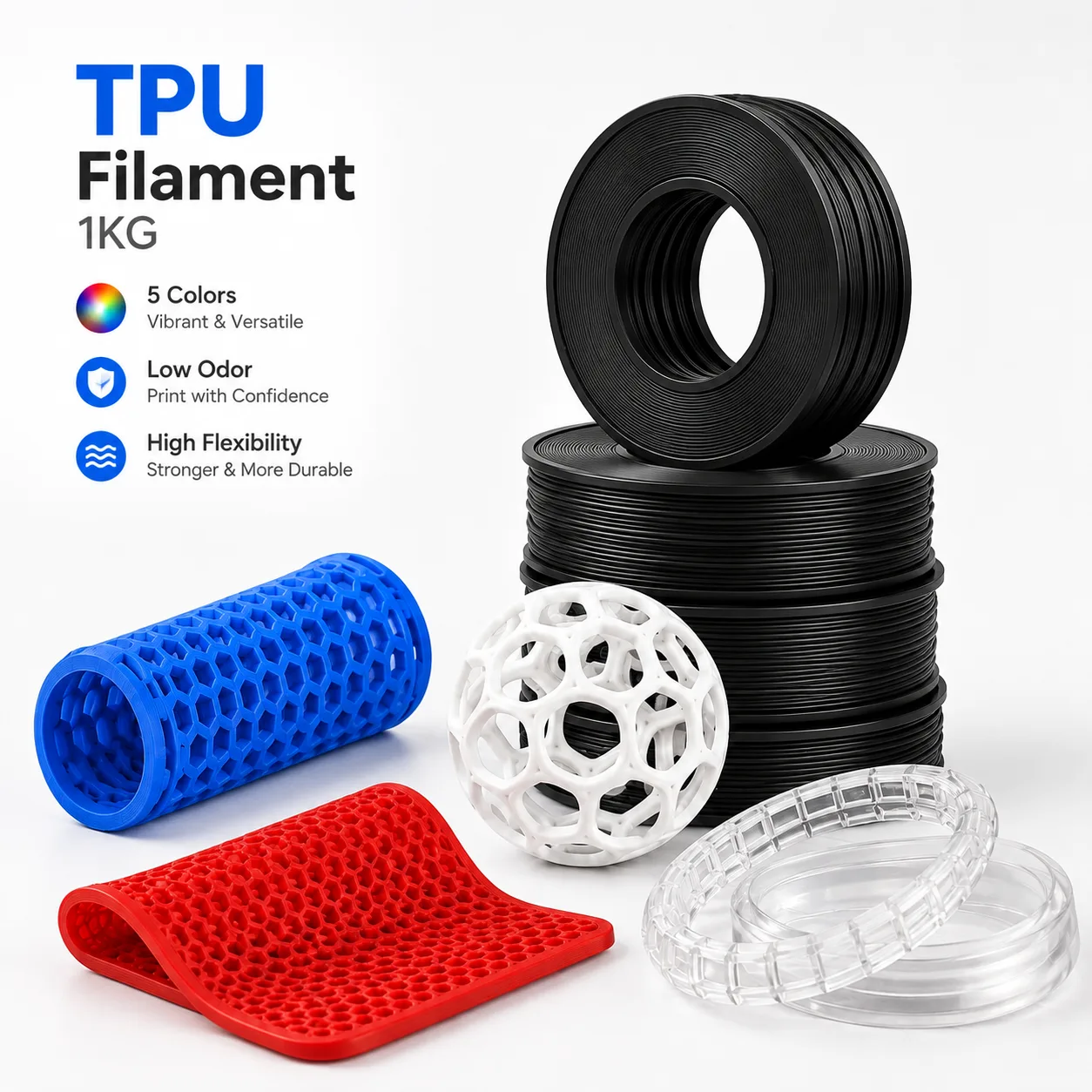
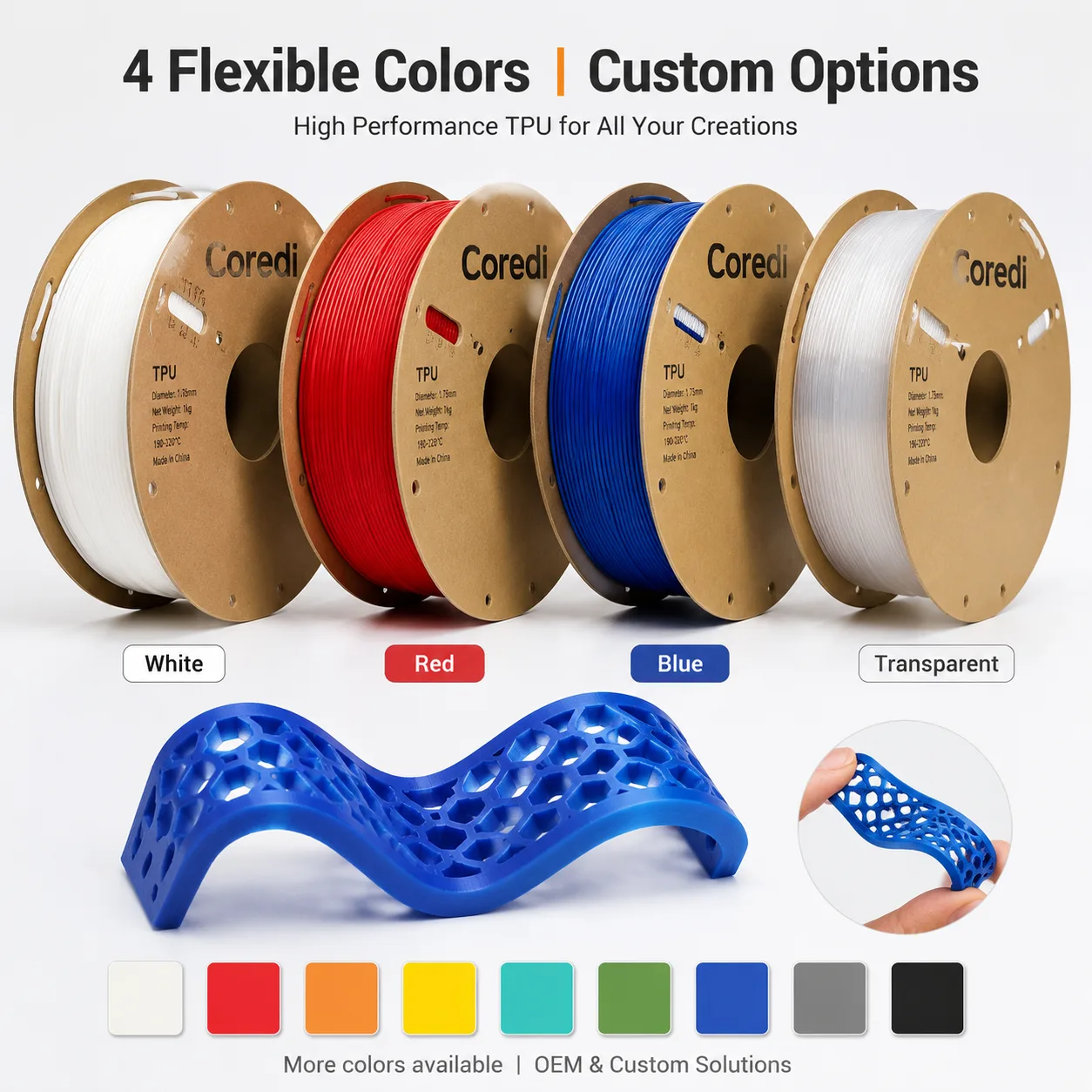
  • Want flexible parts that look as good as they perform? Choose from TPU White, Red, Blue or Transparent
  • Afraid of tangled
  • Think TPU is too hard to print? Our 95A TPU is tuned for Bambu Lab high-speed printing
Compare filaments
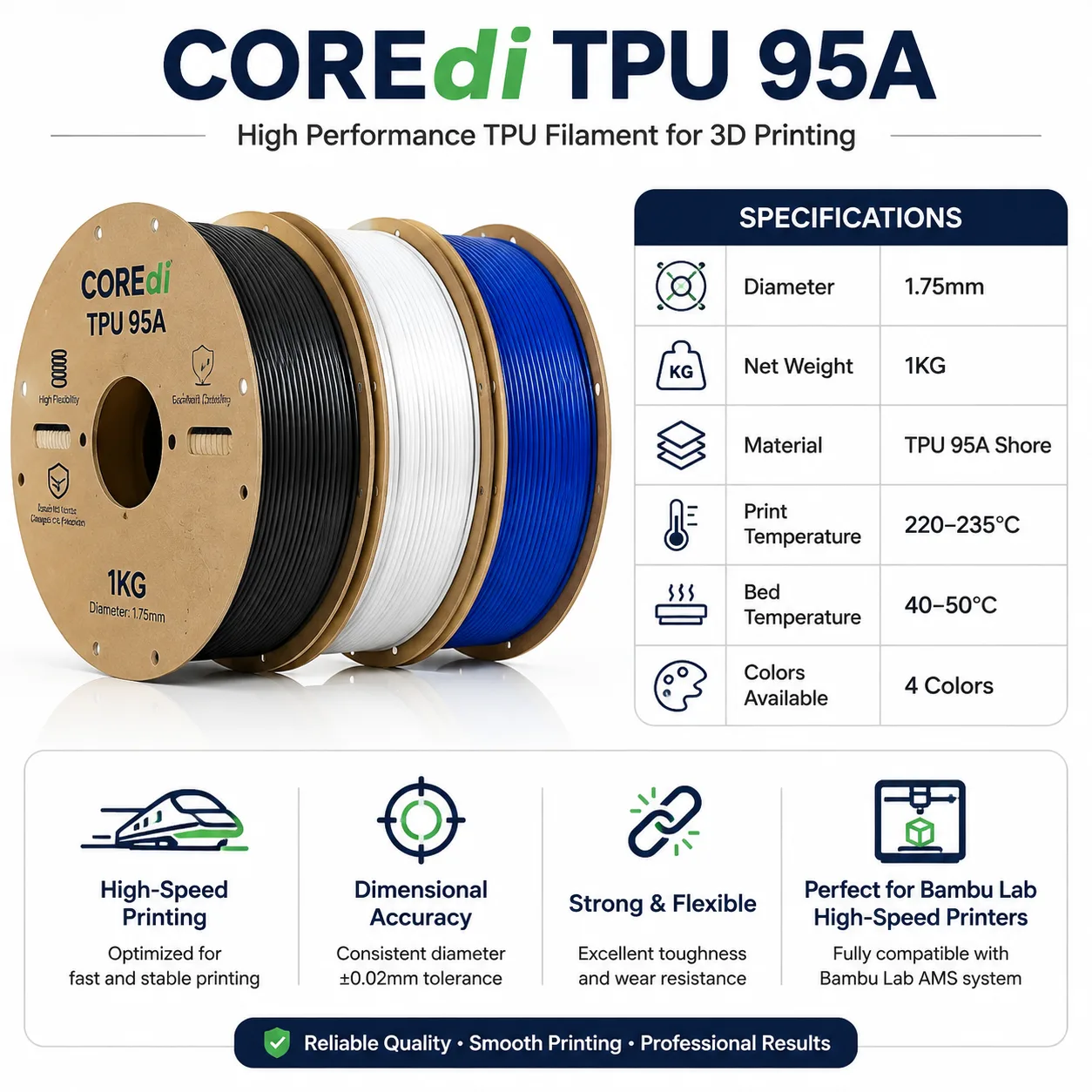
Diameter 1.75mm
Material TPU
Quick Answer

What does 95A hardness mean and why does it matter?

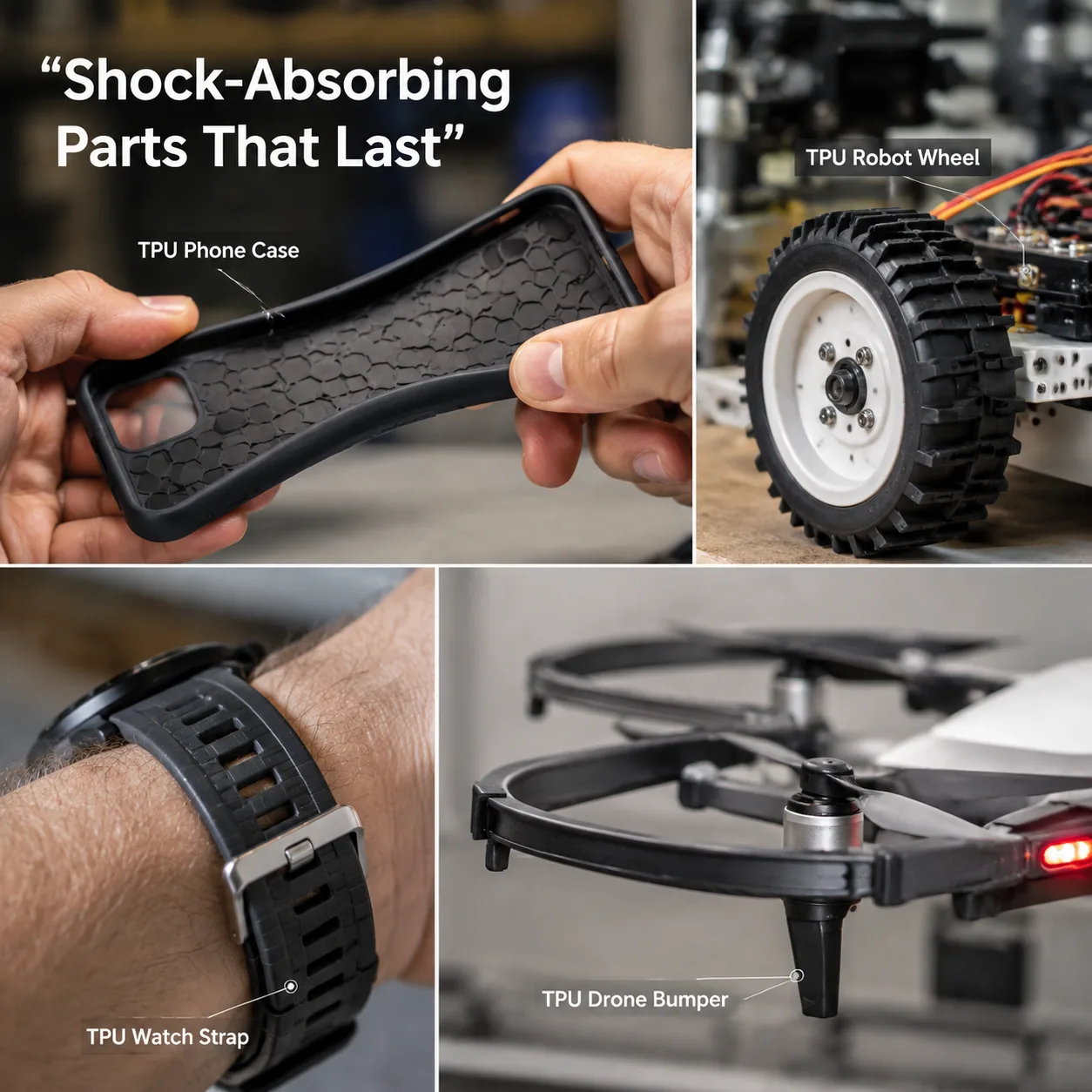
95A refers to Shore hardness on the A scale — a soft, rubber-like flexibility. It means parts bend, compress and spring back instead of cracking, which is why TPU 95A is the go-to for phone cases, gaskets, straps, robot wheels and shock-absorbing components.

Full answers below
Is it right for my project?

Best for: Ideal for soft-touch functional parts that need to survive repeated flexing - available in 5 colours; 1kg spools; lead colour TPU Black. Not ideal for: Not for high-temperature applications; switch to ABS or PC where heat resistance is required - available in 5 colours; 1kg spools; lead colour TPU Black.

Print settings

Nozzle 220°C

01 · Why this one

Product highlights

3 reasons

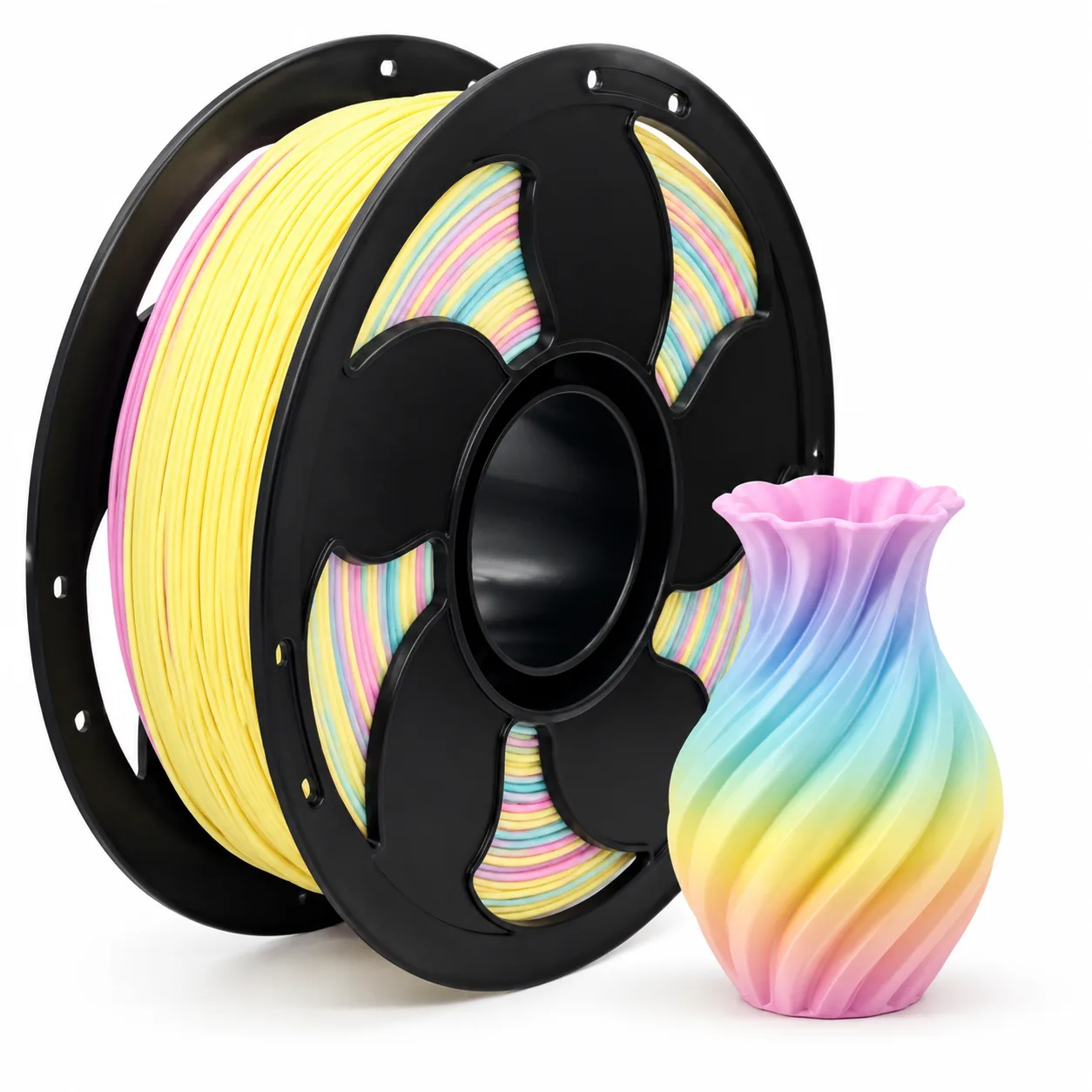
Want flexible parts that look as good as they perform? Choose from TPU White, Red, Blue or Transparent

each hue stays vivid through repeated flexing, so protective cases and straps keep their fresh look even after heavy use.

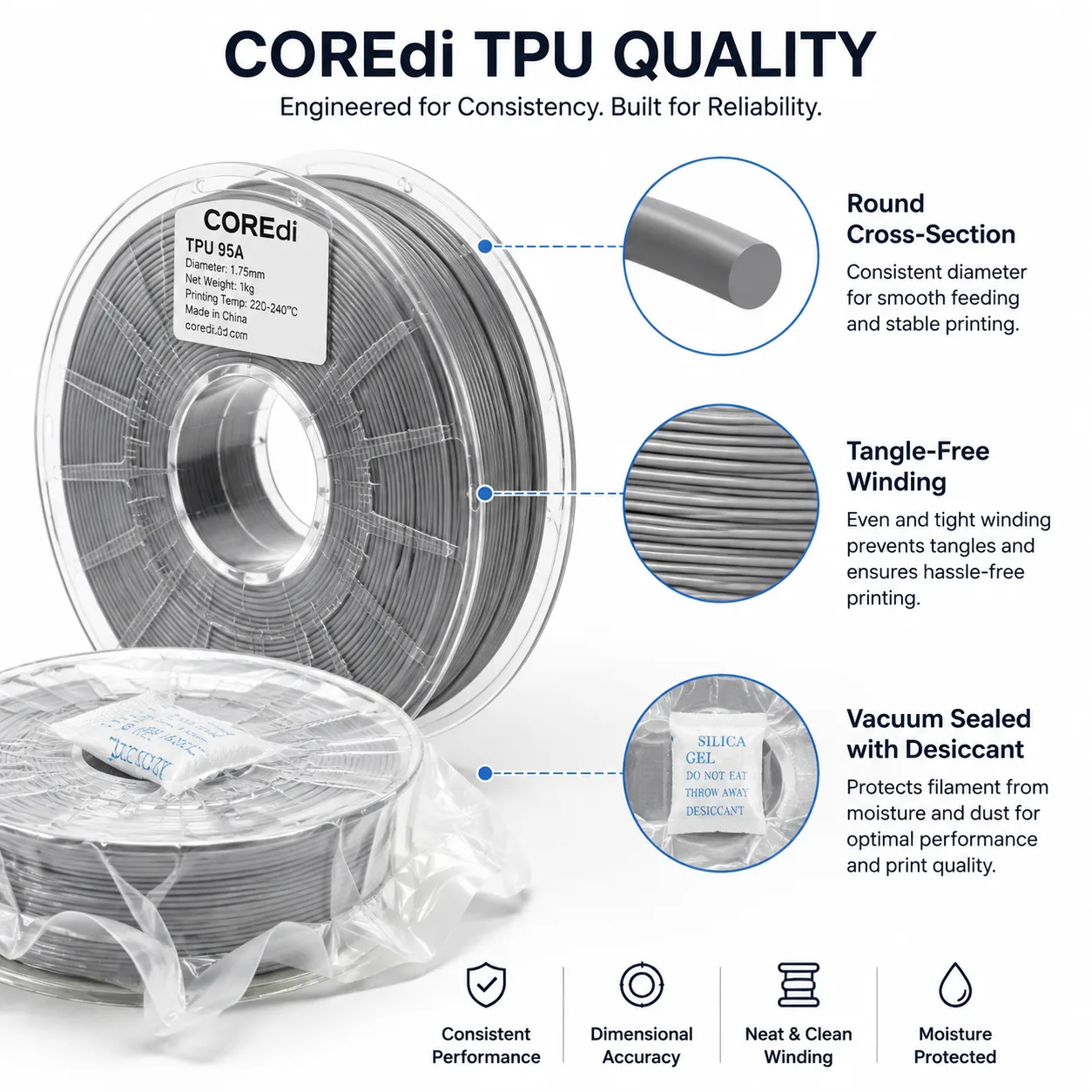
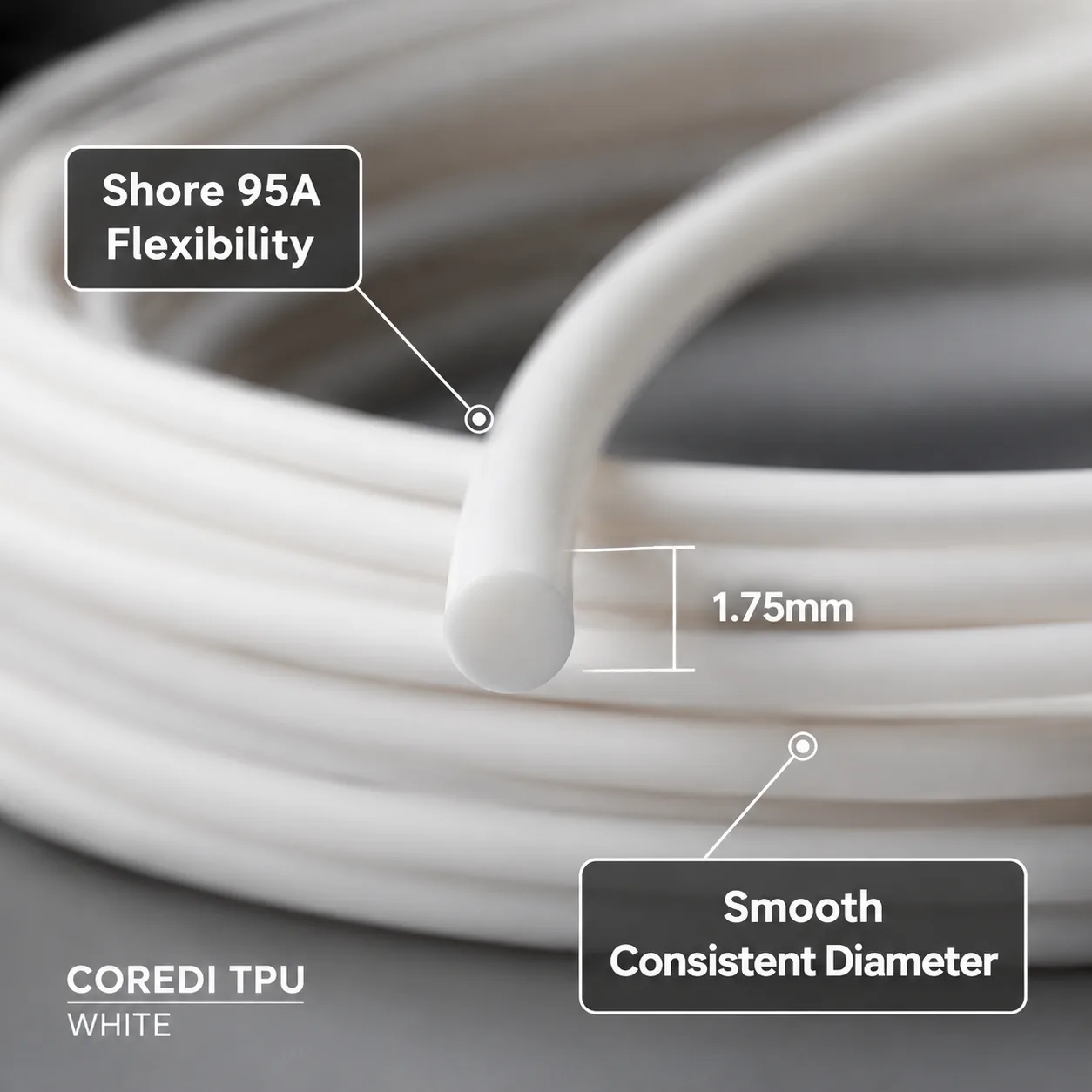
Afraid of tangled, wobbly spools ruining your flexible prints? Our TPU is wound neatly and evenly on the spool with a consistent 1.75mm diameter, giving stable feeding for reliable, wrinkle-free flexible prints.

Think TPU is too hard to print? Our 95A TPU is tuned for Bambu Lab high-speed printing

engineered to feed reliably at speed while keeping the softness and layer bonding flexible parts need.

Technical Data

Specifications

Diameter 1.75mm
Material TPU

Print Profile

TPU 95A 1.75mm 1KG prints best at 220°C nozzle.

Nozzle Temp220°C

Spool Specification

Spool details for your feeding and handling setup.

Gross Weight1.3 kg
Lengthapprox. 345m
Spool Size (L×W×H)21 × 21 × 7 cm
Pack FormatPiece
Spool TypeRound Spool

Attributes

Country / Regionchina
HS Code39169090
Item No.tpu-95a-3d-printer-filament-flexible-high-speed-bambu-lab
Material tpu
Applicable Scenarios 3DPrinting
Is it smart? Non-smart
Diameter 1.75mm
Length approx. 345m
Appearance Round Spool
Before You Ask

Frequently Asked Questions

What does 95A hardness mean and why does it matter?
95A refers to Shore hardness on the A scale — a soft, rubber-like flexibility. It means parts bend, compress and spring back instead of cracking, which is why TPU 95A is the go-to for phone cases, gaskets, straps, robot wheels and shock-absorbing components.
Will this TPU work on my printer?
Yes, it's 1.75mm and prints on most FDM machines, but it's specifically optimized for Bambu Lab high-speed printing. A direct-drive extruder is strongly recommended for flexible filament; Bowden machines can work with slower speeds and careful retraction.
What print settings does TPU 95A need?
Print at 220–235°C with the bed at 40–50°C. Use slow speeds, especially the first layer, and disable or minimize retraction to avoid jams in flexible filament. A dry, cool environment helps consistent feeding.
How long does a 1KG TPU spool last?
A 1KG spool of 1.75mm TPU gives roughly 330 metres. TPU parts like phone cases or gaskets are small, so a spool can last many prints; bigger items like robot wheels or footwear parts consume it faster.
Do the TPU colors stay consistent?
Yes — White, Red, Blue and Transparent are produced with fixed formulas, so reorders match. Transparent TPU has a soft translucent look ideal for light-diffusing parts; store all spools sealed with desiccant to keep moisture out.
What speeds can this TPU handle, including high speed?
For quality, print at 20–40mm/s; on Bambu Lab machines with direct drive you can push to 60–80mm/s using the TPU high-speed profile. Start slow for tricky first layers, then increase speed once adhesion is solid.
What should I use TPU for — prototypes or final parts?
Both, but TPU shines as a finished product material: phone cases, gaskets, seals, drone bumpers, watch straps, robot wheels and flexible toys. Prototypes benefit too, since you can test real flex and impact behavior before mass production.
How should I store TPU filament?
TPU is hygroscopic, so moisture is the enemy. Each spool ships vacuum-sealed with desiccant; store opened spools in a dry box at low humidity. If prints become stringy or weak, dry the filament at 60–70°C for 4–6 hours.

Documentation & Downloads

Everything we publish for this material, in one place.